


France's gambling giant, FDJ United, hit by tax rises across Europe

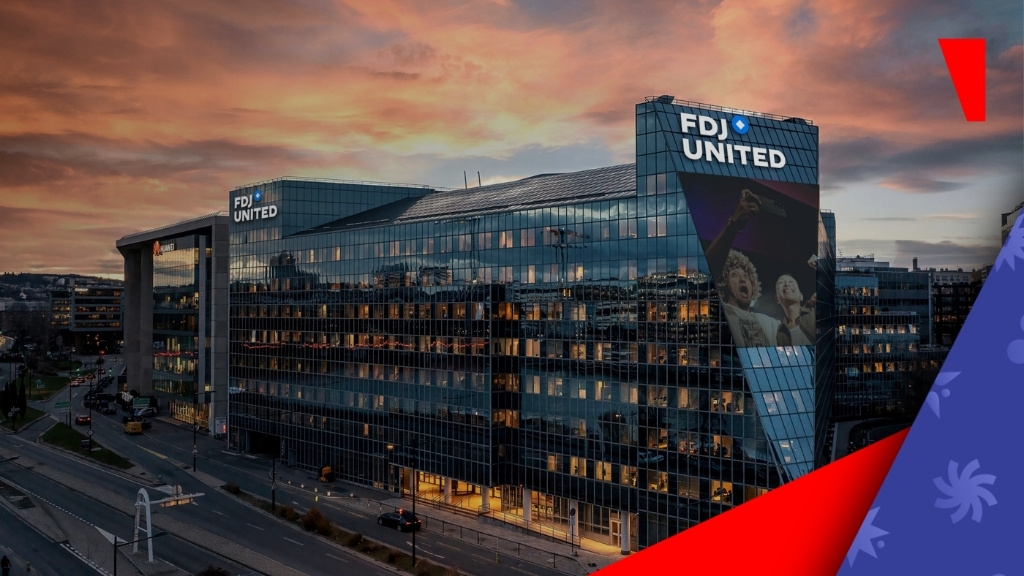
FDJ United, the company, which owns France’s national lottery and has expanded across Europe through acquisitions including Kindred, said its 2025 turnover fell even as gambling activity edged up. It is now bracing for a fresh round of tax rises in 2026, particularly in the UK, while trying to revive its online arm, which has been hit hardest by regulatory clampdowns.
FDJ United reported gross gaming revenue of €8.706bn in 2025, up 1% on a like-for-like basis, but revenue was down 3% to €3.678bn after accounting for tax changes. The company said it expected “slight growth” in revenue in 2026, but warned that additional gaming taxes of “nearly €90m” would weigh on the year ahead.
Despite the headwinds, the company proposed lifting its dividend to €2.10 per share. It also highlighted a record free cash flow of €782m.
Alongside the results, the group announced changes to its executive committee. Pascal Chaffard, previously the company’s chief financial officer, will take over the online betting and gaming division while also leading group strategy and operational transformation.
Taxes bite as online betting slows
An uneasy arithmetic of gambling taxation has been weighing on the group’s performance. FDJ United said betting and gaming taxes are applied to gross gaming revenue and, as a result, “any increase in tax automatically reduces revenue and, by the same amount, recurring EBITDA, at stable operating costs.”
In 2025, FDJ United said the impact of tax increases was “over €50 million”, reflecting changes in France, the Netherlands and Romania. Those increases include France’s Social Security Financing Act for 2025, which raised levies across several categories from 1 July 2025, including online sports betting, where the public levy rate rose from 54.9% to 59.3% of gross gaming revenue.
The group is also paying a new French tax on advertising and promotional spending. FDJ United said the 15% levy, introduced in July 2025, “had an impact of over €5 million in 2025” and is expected to exceed €10m in 2026, “when major sporting competitions are scheduled.”
Those pressures were most visible in the online betting and gaming division, now enlarged by Kindred brands such as Unibet and 32Red, where revenue fell 11.8% to €907.7m on a restated basis. The company pointed to a “particularly unfavourable 2024 comparison base”, along with tighter Dutch rules and the cumulative effect of “numerous tax increases” across several markets.
By contrast, the group’s French lottery and retail sports betting business was steadier. Lottery revenue rose 2.2% to €2.096bn, while retail sports betting revenue dipped 2.3% to €442m, a fall FDJ United linked to comparison with the Euro football tournament in 2024.
Stéphane Pallez, the chair and chief executive, said: “In 2025, FDJ UNITED demonstrated the strength of its model and continued its transformation, in an environment affected by tax increases and tighter regulations on gaming.” She added: “With a strengthened performance plan and a new organisation of its online betting and gaming business unit, the Group will continue to improve its operational efficiency to return to its profitable and sustainable growth path by 2026.”
Rebuilding the online arm
The company said it had completed Kindred’s integration and began shifting brands and platforms onto its own systems. It also described a surge in players, saying the online betting and gaming unit “significantly increased its number of active players by over 10%,” calling it “a pillar of its marketing and responsible gaming strategy.”
FDJ United is also betting that a more technology-driven marketing can stabilise its online performance. In its investor presentation, the company said the online business in 2026 would be driven by an “expanded IA fuelled marketing automation and automated customer operations”.
A state-backed giant under scrutiny
Recently, FDJ United’s size and privileged position drew political and regulatory attention in France.
In a Senate hearing last year, Isabelle Falque-Pierrotin, the head of the national gambling regulator ANJ, warned that the Kindred acquisition “accentuates a major difficulty we had already identified, namely the conflict of objectives inherent to FDJ United’s duality.” She argued that “the monopoly requires limiting the offer of games in order to better protect players,” while “as a listed company, FDJ United logically pursues growth and profitability objectives in the service of its shareholders.”
The regulator has also challenged the company’s marketing ambitions. In a decision rejecting a push to ramp up promotional spending, the ANJ said FDJ United’s plans presented “a risk of intensification of gambling practices which could encourage a shift towards excessive or pathological gambling.”
FDJ United has tried to answer those concerns with a sharper focus on safer play and compliance tools. The company said it had introduced “Safe Play”, describing it as “a programme of commitments for responsible gaming,” and pointed to measures such as “the investment of at least 10% of the Group’s advertising budget in awareness-raising campaigns.”
Table Mountain has the views; we’ll bring the deals. SiGMA Africa lands in Cape Town from 03–05 March 2026 and draws 3,000 minds to a rising frontier of innovation and ambition. It’s shaping the continent’s future. Be there.


