


Pauline Hot leads ANJ in France’s battle against gambling normalisation

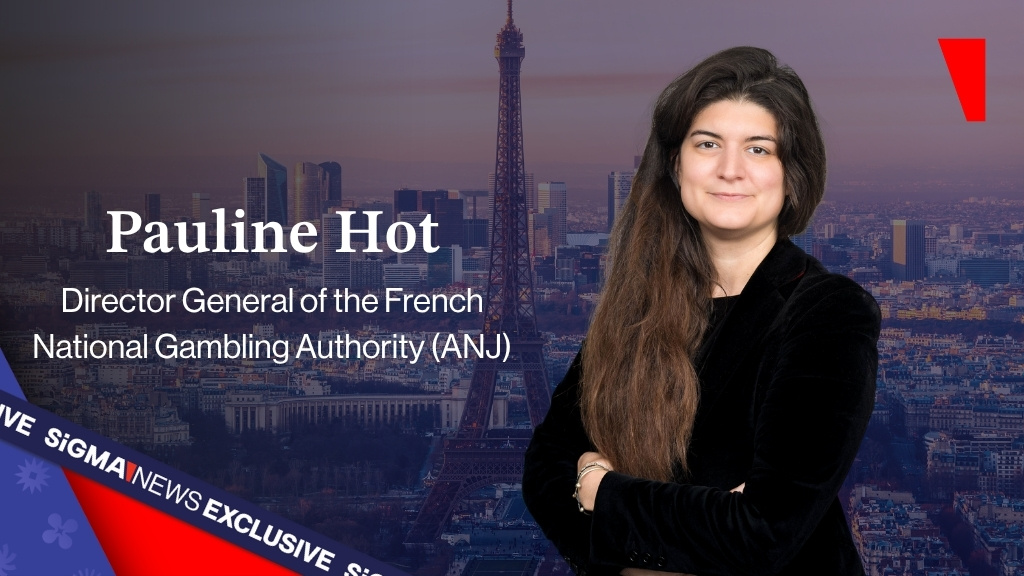
When Pauline Hot took over as Director General of the French National Gambling Authority (ANJ) this summer, she entered one of the most delicate regulatory landscapes in Europe. A graduate of the École Normale Supérieure and the École Nationale d’Administration, and previously a senior official at the Conseil d’État, she now finds herself at the helm of an institution facing a rapidly expanding gambling market. In an interview with SiGMA News, she discussed how she is settling into the role and how she envisions the regulator’s mission.
Between regulation and public health
For Pauline Hot, the attraction of the job lies in its balance of economic and social objectives. “What I find exciting is that gambling regulation is always evolving, always innovating. We have to be agile, always alert to new entrants and new products,” she told us. “But at the same time, we have to take into account public health, with player protection at the heart of our mission, and issues of public order such as the fight against money laundering and the financing of terrorism. That balance is really specific to the ANJ, and it makes our work particularly interesting.”
Yet she is equally clear that gambling must not be allowed to become just another leisure activity, a stance firmly aligned with the philosophy of French lawmakers and regulator. “Even if gambling is authorised and regulated, it should not become a product of everyday consumption,” she warned. “Playing is allowed, but it carries risks. We are committed to fighting the idea that gambling is an ordinary leisure product, because the risks are not ordinary or harmless.”
Illegal operators and AML efforts
One of the biggest tests facing regulators worldwide is the explosion of illegal online casinos. France, unlike some neighbours, has kept that door firmly closed. “On online gambling, we have 18 licensed operators for sports betting and poker. But when it comes to online casinos, these operators are completely illegal in France,” Pauline Hot explained. “If one day they were to be authorised, it would have to be within a very strict regulatory framework, probably stricter than for other games, because the design of these games is particularly addictive.”
France has been stepping up its fight against such sites. In 2024 alone, the ANJ issued 232 blocking and dereferencing orders covering 1,337 URLs. Pauline Hot insists the administrative procedure introduced in 2022 has transformed their ability to act. “It’s no longer a question of judicial orders taking months. We can now issue administrative blocking orders directly, which has made us much more effective,” she said.
But the challenge remains resource-driven. “It is less a question of legal powers than of financial and human resources,” she admitted. “Preparing a robust decision takes time, because companies can challenge them, and we do not have unlimited means in a constrained budgetary context.”
The technological arms race adds another layer of difficulty. “Mirror sites are a real issue. It’s very easy to create one, sometimes just by switching two letters in a domain name. That forces us to launch new procedures, again and again. We’re trying to optimise by extending injunctions to cover both the main sites and their mirrors to be faster and more effective.”
Major challenges ahead
Pauline Hot describes 2025 as “a very important year for the sector, and therefore for the regulator.” She pointed to “growth in gross gambling revenue, which means the market is doing well, but this growth comes with competitive tensions.”
At the same time, new forms of gambling are emerging. “There will be the opening of new activities with digital object games, Web3 games (online games that use blockchain technologies), by the end of the year,” she said. For the ANJ, this is uncharted territory that will test its agility as a regulator.
Pauline Hot also emphasised the need to stay focused on the ANJ’s long-term strategy. “We are halfway through our 2024–2026 strategic plan. Our key objectives remain reducing the share of excessive players in operator revenues, protecting the integrity, legality and transparency of the market, and maintaining overall balance in the gambling sector. That will be our priority until 2026.”
The regulatory challenge of FDJ United
Few players illustrate the challenges of regulation better than the Française des Jeux (now FDJ United), the state monopoly now expanding fast into new markets. Its growing influence, particularly after the acquisition of Kindred, has led some to question whether such a powerful entity can be effectively regulated. Pauline Hot is cautious, but firm.
“There are two aspects here. On the competition side, we do not have competence; that is for the Competition Authority, which has authorised the acquisition with conditions,” she said. “But what is certain is that monopolies and exclusive rights are granted by the legislator with a special regulatory framework. That is why we give opinions each year on the offer programme of FDJ and PMU, and why we authorise their games before they can be offered to the public.”
She stressed that the Council of State recently confirmed the ANJ’s powers in this regard. “We use the tools given to us by law to ensure that monopolies like FDJ United fulfil the reinforced obligations that come with their exclusive rights,” she explained. That includes scrutiny of their marketing. “We have asked FDJ United to review its marketing plan downwards, and we keep a very close eye on their strategies.” In July, the ANJ indeed rejected FDJ United’s request to increase promotional spending, concluding the plan “presents a risk of intensification of gambling practices, in particular among the most vulnerable people (notably 18–25 year olds and at-risk players).”
Moreover, ANJ president Isabelle Falque-Pierrotin recently warned senators that the Kindred acquisition “accentuates a major difficulty: the conflict of objectives inherent to FDJ United’s duality.” As a monopoly, she said, FDJ United should limit its offer to protect players, yet as a listed company, it inevitably seeks growth for shareholders. She stressed that the regulator’s “tight control” aims to ensure growth stays “within the limits… that do not explicitly encourage excessive gambling.”
Sport, betting and integrity
The surge in sports betting, especially among young people, is perhaps the most sensitive issue on her desk. In H1 2025, online sports betting stakes rose 15% to €6 billion, with GGR up 10% to €961 million. Active player accounts for sports betting reached 4.1 million (+11%).
“There is now a structural link, an assimilation, between sporting pleasure and sports betting,” she warned. “It raises particular questions about the protection not only of minors, who are not allowed to play in France, but also of young adults aged 18 to 25.”
She pointed to tools such as the “sports list”, which restricts which competitions and outcomes can be bet on, and the national betting data system that allows anomalies to be spotted through algorithms. “We’ve seen a real decrease in alerts in France, contrary to what is being observed at the European level. That was especially visible during the Olympic Games, which were a real success in terms of integrity.”
But she remains cautious about the cultural impact of gambling’s visibility. “For us, the growth of the sports betting market is an opportunity for sport, but it must not result in a complete marriage between sports betting and sport,” she said. Among the ANJ’s proposals are limits on advertising, drawing inspiration from the UK’s “whistle-to-whistle” ban, and stricter controls on sponsorship. “It’s about fighting against this normalisation of gambling,” she stressed.
Protecting the young
Beyond sports, Pauline Hot is adamant that protecting younger generations must be a priority. “The issue of young people is of primary importance. We are considering experiments such as player cards or QR codes in retail outlets, as in other countries. Depending on the results, it might be relevant to go further. For us, it is a crucial subject.”
Her position echoes a recent public outcry. In July, a collective of associations, public officials and the ANJ president herself, Isabelle Falque-Pierrotin, signed an op-ed warning against the banalisation of gambling. The piece highlighted that more than a third of teenagers between 15 and 17 have already played despite the legal ban, and called for measures such as advertising restrictions, sponsorship limits, and reinforced controls on retail sales to minors.
Steering the market’s growth
With the French gambling market still expanding, stakes on the Champions League final reached €38 million online, and €15 million on the Roland Garros final. Pauline Hot knows the pressure is mounting. In the first half of 2025, the French gambling market grew to €5.7 billion in Gross Gaming Revenue, up 3.5% from last year. Online gambling reached €1.4 billion (+6%), with sports betting leading the way at €961 million (+10%) on €6 billion in stakes. The number of active online player accounts rose to 4.7 million, an increase of 9%.
Pauline Hot’s core message, however, is unwavering. Gambling may be legal in France, but it cannot be trivialised. “It is not an ordinary consumer product,” she insisted. “And that is the message we will keep repeating.”
Stay in the loop and join the biggest iGaming Community in the world with SiGMA’s Top 10 news countdown. Subscribe HERE for weekly updates from the world’s iGaming authority and exclusive subscriber-only offers.


