


Diana Larina on people-first marketing in iGaming

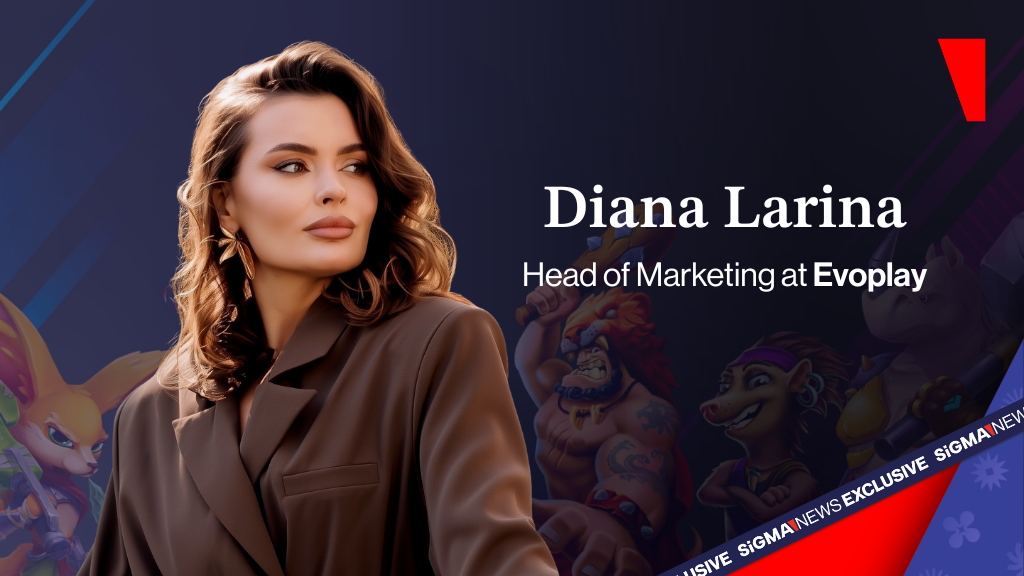
In the rapidly evolving iGaming sector, where innovation frequently outpaces user needs, Diana Larina is advocating a distinctive approach, prioritising people at the core of every marketing decision. As Head of Marketing at Evoplay, Diana has played a pivotal role in guiding the company through a period of significant growth and evolution. She has adeptly combined data-driven marketing with a strong emphasis on incorporating user feedback, contributing to the company’s ongoing success.
In this exclusive interview, Diana talks about her journey from SaaS to iGaming, explains the philosophy behind people-first marketing, and gives an honest look at the future of player engagement, affiliate partnerships, and the following significant shifts shaping the iGaming landscape. The interview was conducted by Shirley Pulis Xerxen during ICE 2026 in Barcelona.
Putting people first
Diana, thank you for joining us. Let’s start with your journey. How did you become Head of Marketing at Evoplay, and what shaped your approach to marketing in iGaming?
Before joining Evoplay, I spent a few years working on SaaS tech projects. But over time, I realised I wanted something more dynamic, rooted in entertainment and creativity. That’s when the opportunity at Evoplay came along. I initially joined as Head of B2B Marketing, and over time, my role evolved into a broader growth function. Today, I lead the entire marketing team, and we’re working on some inspiring projects that will shape the next few years.
How has your marketing approach evolved with the rapid changes in iGaming?
New technologies have a significant effect on how we build campaigns so that users can notice them. People usually see about 5,000 adverts every day. So you have to know how to cut through the noise to create your campaigns right for the audience.
You’ve been very vocal about people-first marketing being the secret ingredient in iGaming right now. What do you mean by that, and how are you actually building that into your team’s day-to-day work?
When I talk about people-first marketing, I mean putting the audience at the centre of everything we do. It’s about understanding what players want and building campaigns, and even products around that. For example, we’ve launched several campaigns that directly incorporated user feedback. As a result, those games climbed into the top 10 of our portfolio.
We also monitor community platforms where players share feedback, and we use their exact language in our campaigns. It creates a sense of authenticity, like the players are speaking to each other. It also helps us to build clear communication with the users.
One memorable moment was during a livestream with a partnered streamer. Viewers requested a bonus buy feature for a game, and the team agreed that this game needed that feature. Just a few months later, we launched an updated version with that exact feature.
Everyone in the team is engaged in this collaborative process at every step and at every stage of their responsibility. That kind of responsiveness builds trust and loyalty.
Game development with affiliates on board
The affiliate conversation has shifted dramatically. Five years ago, affiliates were mostly traffic drivers; now you’re seeing them as creative partners, data partners, data experts, and even building games with them. How do you actually make that work on an operational level, and what does a true partnership look like versus just another transaction?
Talking about affiliates, clear communication and trust are the foundation of everything that we built. Five years ago, affiliates were mostly about traffic. Today, they’re co-creators, data analysts, and even product collaborators. A great example is our title Uncrossable Rush that we co-developed in partnership with SlotCatalog. Evoplay was the first provider to develop a game in collaboration with an affiliate, setting a new trend for this kind of partnership and the result was a title the community really wanted to play. Similar projects are in the pipeline for the company right now.
Thanks to clear communication and trust that we had with the partner, we could find the early signals of the specific theme, mechanics and features being popular with the player community.
Operationally, we maintain close contact with our partners: weekly or bi-weekly calls, shared roadmaps, and early access to concepts. For Uncrossable Rush, SlotCatalog was involved from the concept stage, and thanks to the initial success, we ended up launching a Christmas iteration of the original game last December, which they helped shape.
Affiliates are now our closest link to the player community, and their insights are invaluable for product development.
Evoplay’s Affiliate Hub now connects over 500 partners. What gap did you see in the market that led to its creation?
The idea to build Affiliate Hub came from a very simple thought that, in order for campaigns to be more efficient, we have to deliver all materials in one place. Affiliates were spending too much time searching for assets, reading press releases, or navigating multiple platforms. The simpler and better-structured the information you can provide, the more efficient the game promotion will be.
Players are getting more and more demanding. They expect more from the campaigns. They want it to be more personalised, and they want to know that people care about them. To get it done right, you have to be efficient and prepare all the materials. Covering this, Affiliate Hub helped Evoplay get closer to affiliates.
Raising the bar in personalisation
Everyone talks about personalisation, but you’ve gone further. You are actually shifting focus from promoting casinos to building brands around games themselves, like your Penalty Shoot-Out franchise. When does that approach work, and when doesn’t it?
Building a brand around a game is not easy. Game providers face a steady stream of releases, and for each one, they need to decide which title to focus on. It isn’t realistic to give the same level of attention to every release, so priorities have to be set.
This year, we focused on Penalty Shoot-Out: Cup Mania, the latest addition to our football-themed series, timed with the FIFA World Cup season. Feedback and analytics showed that earlier players engaged strongly with the new release, helping shape updates and features. The timing and concept proved a strong match, and the game is already performing well, which is why we invested more effort into building the brand around this title.
Overall, this confirms that a franchise-based strategy delivers value across multiple releases. First of all, it helps build long-term loyalty. By listening to player feedback and refining our products, we keep the audience engaged with the brand and interested in future releases. From a business perspective, developing recognisable game series is a more sustainable strategy than treating each release as a one-off.
Retention or acquisition?
Player retention is becoming more critical than raw acquisition. It’s often cheaper and more predictable, but it requires different skills, tools, and even a different mindset. How do you build a marketing team that’s strong at both?
For an iGaming provider, it’s pretty challenging to build effective acquisition and retention strategies because much of that responsibility traditionally sits with the casino operators. They’re the ones attracting and retaining the players directly. So on our side, we have to be incredibly creative and original in how we promote our games to stand out and support both acquisition and retention indirectly.
The competition is intense: every week, dozens of new slots hit the market. That requires a very high level of skills from every team member who joins our team and a very diverse expertise. For the acquisition team, we are putting a lot of effort into working with influencers, streamers, our affiliate partners, and finding new, hidden ways to be right next to the users and to promote the product.
And the same way it reflects on the retention strategies that we are using. We are trying to build new promotion tools that are not seen on the market yet. Also, we are building loyalty systems for the users. It helps us to retain Evoplay’s audience and build a community around the product.
I believe in the community because after COVID, we have seen a huge spike in industries where people are more likely to engage with each other than they were before. For example, the sport of padel, why is it so popular right now? Because people want to talk to people, and it’s a very community-oriented activity. The same is going to be in iGaming; more communities like this will appear.
Co-creating the future
Looking at 2026, where do you see the real white space in iGaming marketing? Not the buzzwords. What’s the actual gap that nobody is solving well yet?
I think that this year, many companies will try to solve the problem of personalisation by making it more user-focused. As a game provider, we will listen more closely to what players want and give them tools to shape the product themselves. We now see things being handled on the casino side. Casinos let users make a slot out of the box, where they can choose the theme, the mechanics, the bonus features, and play it.
This trend will grow. More companies will offer tools that let users co-create content, not just with affiliates or influencers, but directly with the audience.
That’s where I see a huge opportunity: giving players agency and making them part of the creative process.
And finally, if you had to bet on one major shift in player behaviour over the next 3-5 years, what would it be?
Classic slots remain popular. However, we are seeing an increased interest in other verticals with younger players, such as crash. Although we are currently mainly targeting an audience under 30 with this type of content, the range of users who like playing crash games is going to be wider as this demographic matures. We can already see in the land-based area here at ICE that there are some machines that cannot really be called slot machines anymore. They’re machines for land-based casinos with crash games inside, which means that crash mechanics are switching to the more classic ways we used to gamble.
That innovation signals a broader shift in how people want to engage with games: faster gameplay, more dynamic mechanics, and shorter attention cycles.
It’s the influence of the TikTok generation – people with very short attention spans, who want fast content and fast consumption of entertainment. As a result, we will see more hybrid products that blend the features of classic slots with the immediacy of crash games. These formats will drive both acquisition and retention in new ways and will define the next wave of innovation in iGaming.
Brazil’s not waiting, and neither should you. BiS SiGMA South America, 06–09 April 2026, brings 18,500 delegates, 250+ sponsors to LatAm’s gaming capital. São Paulo’s bringing more sizzle than a beachside samba. Get in early or get left behind.


