


BSP Governor: Philippines moves to avert FATF ‘grey list’ return

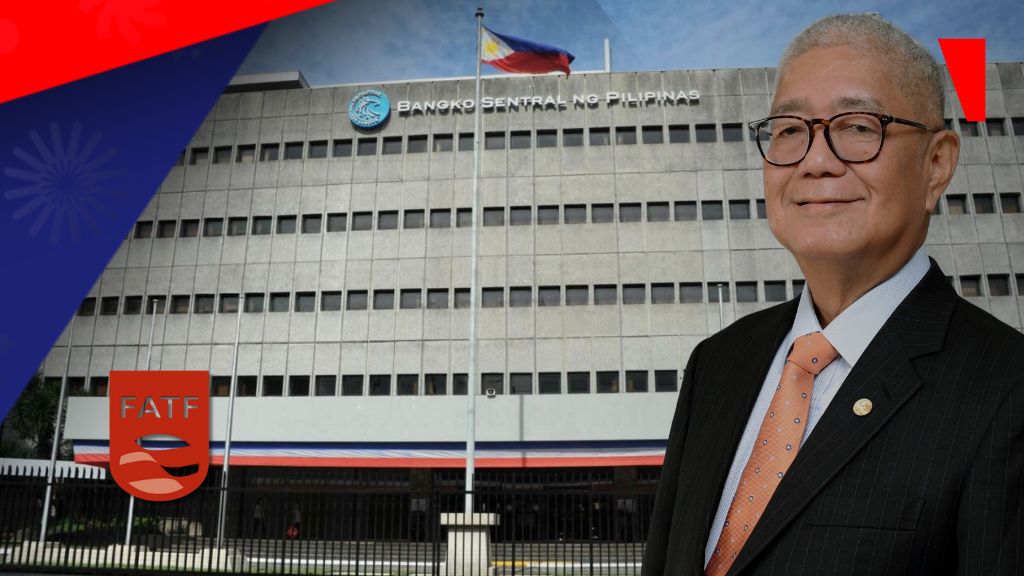
Philippine authorities are intensifying efforts to prevent the country from being placed back on the Financial Action Task Force (FATF) grey list, as concerns grow that an ongoing corruption probe linked to flood control projects could expose weaknesses in the financial system’s safeguards.
The risk has emerged less than a year after the Philippines exited the FATF grey list in early 2025, following almost four years of reforms aimed at strengthening anti-money laundering and counter-terrorism financing controls.
According to a report by the state-run Philippine News Agency, the Bangko Sentral ng Pilipinas (BSP), which chairs the Anti-Money Laundering Council (AMLC), has acknowledged that the country faces vulnerabilities that could draw the attention of global watchdogs. BSP Governor Eli Remolona told local journalists that the situation is a test of whether the reforms that led to the Philippines’ removal from the list are robust enough to withstand high-profile cases involving public funds.
Asset freezes linked to flood control projects
At the centre of current concerns is an investigation into alleged anomalies in government-funded flood control projects. As part of the probe, the AMLC has moved to restrict access to thousands of financial instruments believed to be linked to individuals and entities under investigation.
Court of Appeals freeze orders now cover more than 4,600 bank accounts, close to 300 insurance policies, and a range of electronic wallets and securities accounts. The total value of frozen assets has reached around PHP13 billion ($220 million), with officials indicating that the figure could rise as financial tracing continues.
Regulators view these actions as a demonstration that enforcement tools are being used decisively, a factor that will matter when the FATF assesses whether the Philippines continues to meet international standards.
Long road to the next FATF review
Despite these measures, officials have cautioned that preventing a return to the grey list will require sustained effort over several years. The next formal FATF evaluation cycle affecting the Philippines is expected around 2027.
Inclusion on the grey list signals that a country has gaps in its framework for preventing money laundering and terrorist financing. Such a designation can raise compliance costs for banks, deter foreign investors and complicate cross-border transactions. The prospect of returning to the list, therefore, carries economic as well as reputational risks.
Authorities are expected to focus not only on enforcement actions but also on demonstrating that institutions can detect, investigate and prosecute financial crimes effectively, even when politically sensitive projects are involved.
Reforms credited for 2025 exit
The current push comes against the backdrop of reforms that led to the Philippines’ removal from the FATF grey list in February 2025. The government credited tighter supervision of high-risk sectors, stronger interagency cooperation, and more aggressive enforcement of anti-money laundering rules.
The Philippine Amusement and Gaming Corporation (PAGCOR) was recognised in 2025 for its role in strengthening oversight of the gaming sector, long viewed by international bodies as vulnerable to illicit financial flows. Under enhanced supervision and enforcement programmes, gaming licensees were subjected to closer monitoring and stricter compliance requirements.
Another key policy shift was the government’s decision to ban Philippine Offshore Gaming Operators (POGOs), a sector that had attracted international scrutiny over allegations of money laundering and weak oversight. The ban was widely seen as a turning point in restoring confidence in the country’s regulatory resolve.
Asia’s undisputed regional heavyweight lands in Manila, 01–03 June 2026. Backed by PAGCOR and powered by 16,000 delegates, SiGMA Asia delivers two levels of game-shaping influence. If you’re serious about the region, this is the room for you.


