


Inside South Africa’s Responsible Gambling Foundation efforts

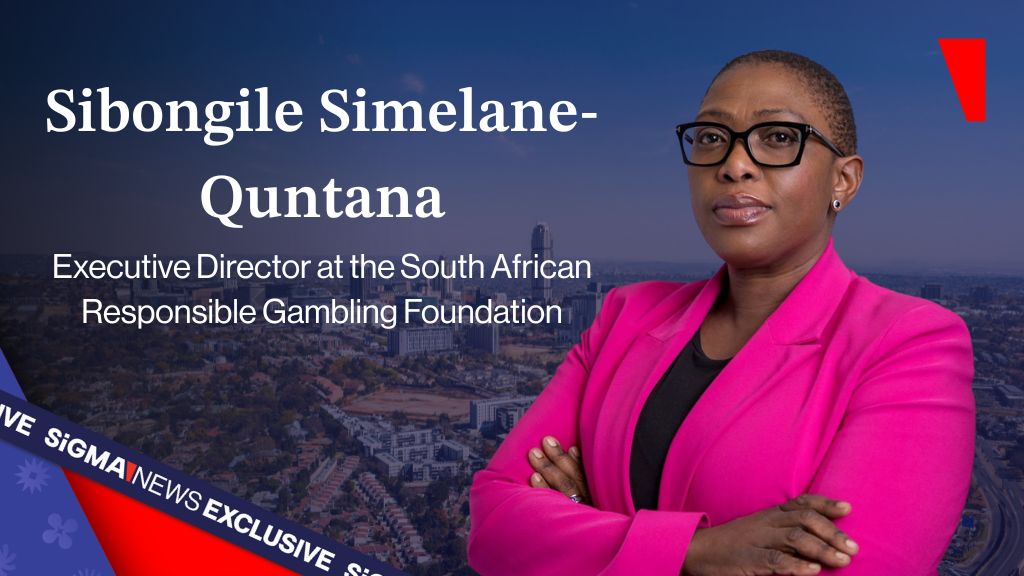
The South African Responsible Gambling Foundation (SARGF) says the country is entering a critical period in its fight against gambling-related harm, as online betting surges and more young people seek help.
Talking to SiGMA News, Executive Director Sibongile Simelane-Quntana outlined the scale of the challenge and the pressures placed on the organisation, which is responsible for running the National Responsible Gambling Programme (NRGP).
Expanding demand and limited resources
Simelane-Quntana explains that the Foundation was created as a not-for-profit company, established in accordance with the Companies Act, funded by contributions from casinos, bingo operators, bookmakers and other sectors of the gambling industry, capped at “0.1% of the industry’s Gross Gambling Revenue (GGR).”
That financial cap, however, is increasingly strained. While income has grown, she warns the organisation still falls far short of what it should be receiving. The Foundation’s NRGP income “has reached over R40 million ($2.35 million USD) for the first time in the Foundation’s history,” but published national gambling revenues show the programme should be collecting well above that figure. According to Simelane-Quntana, “the Foundation only managed to collect about R41 million ($2.38 million USD), showing a shortfall of R18.3 million ($1.08 million USD).”
She says this gap exposes deeper structural problems: “Some operators and regulators are not committed to the contributions towards the NRGP and benefit commercially from using the National Responsible Gambling Programme’s toll-free counselling line and tag line for advertising compliance.”
Despite funding pressures, the SARGF remains the country’s leading provider of free treatment for gambling disorder. Over two decades, it has supported more than 24,000 people. But long-term tracking of recovery remains difficult. As Simelane-Quntana puts it, “There is currently no standardised matrix available to measure long-term recovery due to the complex and multifaceted nature of the challenges faced by those seeking help.”
Instead, the organisation relies on indirect indicators, such as spikes in helpline calls after awareness events. Public engagement, she says, often produces “a noticeable increase in people contacting the Foundation for help,” a pattern that helps reveal the impact of prevention work.
Reaching remote communities and at-risk groups
The Foundation works with all nine provincial licensing authorities to ensure access beyond major cities. Simelane-Quntana says the NRGP has “over 80 treatment professionals (Psychologists, Social Workers, registered Counsellors) in all 9 provinces to ensure access to counselling and treatment services.”
Much of the Foundation’s recent focus involves children, teenagers and university students, groups increasingly exposed to digital betting. Underage gambling is illegal, but, as she notes, this “does not completely shield young people and children of school-going age from the adverse impact of disordered and irresponsible gambling.”
The organisation’s Taking Risks Wisely programme seeks to equip school learners with information and support. It encourages “learners to become peer ambassadors to their fellow learners through making smart choices and not engaging in illegal activities and ‘taking risks wisely’.” Meanwhile, minors harmed by illegal gambling can access counselling through the “Minor Intervention Programme.”
University campuses are another priority. With many students now legally able to gamble and drawn to online sports betting, the Foundation plans roadshows that include “Responsible Gambling Training for Social Workers and Healthcare Practitioners, with the outcome of cross referrals,” followed by campus activations and “an interactive discussion session using the Bet Chats interactive format.”
Older people, too, are increasingly vulnerable. Research cited by the Foundation shows “a 76,1% prevalence for gambling amongst old-aged social grant recipients.” Social workers therefore run sessions on “budgeting, addiction, and gambling responsibly,” connecting elderly people with further support where necessary.
Rise of digital betting
The growth of online gambling has transformed the South African betting landscape and placed new pressure on prevention efforts. The Foundation acknowledges that digital platforms carry “distinct challenges,” especially for “university students and tech-savvy young adults.”
While exploring new digital tools, such as self-assessment systems and online counselling, the Foundation warns that well-resourced operators dominate the online space. According to Simelane-Quntana, responsible gambling messages are often pushed to “less visible areas of their platforms or communications.”
She says the Foundation cannot easily match the scale and speed of commercial campaigns: “the fast-paced and constantly evolving nature of digital gambling means that responsible gambling interventions must be agile and technologically advanced to keep up.” Limited funding and technical capacity, she adds, “can limit the scope and impact of digital interventions.”
As a result, the Foundation wants stronger regulatory requirements to force operators to prominently display responsible gambling tools and warnings.
Long-term vision
Over the next few years, the Foundation plans to intensify its work across digital platforms while strengthening cooperation with regulators and regional partners. Simelane-Quntana says priorities include “the expansion and modernisation of digital awareness campaigns and support tools” and improving efforts to protect “vulnerable groups such as young adults and university students.”
The organisation also participates in a “community of practice, with organisations that offer problem gambling counselling and treatment in the African diaspora,” using cross-border networks to share best practice.
Despite the scale of the challenge, the Foundation’s underlying mission remains unchanged. Its core purpose, as described by Simelane-Quntana, is “to advocate for responsible gambling practices and minimise the potential harmful effects of disordered gambling,” with a vision of an environment that “responds to gambling trends and effectively manages the effects of problem gambling in South Africa.”
Be part of the action! Join the world’s biggest iGaming community with SiGMA’s Top 10 News countdown. Subscribe HERE for weekly updates, insider insights, and exclusive subscriber-only offers.


