


Sweden tightens oversight of unlicensed gambling operators


On 27 March, Sweden’s gambling regulator Spelinspektionen published a document setting out requirements for operators that do not hold a Swedish licence. The text lists measures designed to prevent players in Sweden from participating in those operators’ games.
As SiGMA previously reported, Sweden is preparing a major legislative package that would move away from a “direction/targeting” criterion in favour of a “participation” criterion. In practice, online gambling would be considered offered in Sweden not only when a site is clearly aimed at the country, but also when a person located in Sweden can, in fact, participate. Spelinspektionen’s March publication fits directly into that logic. Below is a breakdown of the key points and why they matter.
What the regulator proposes
In the document published on its website, Spelinspektionen groups the proposed measures into three areas: access to gambling services; registration, payments and withdrawal of funds; and contractual terms and user-facing restrictions. The order is deliberate. The regulator stresses that the measures are ranked by relative effectiveness. From the authorities’ perspective, the priority is to physically prevent users in Sweden from accessing gambling services altogether, rather than relying on formal disclaimers in terms and conditions.
The central message is that removing Swedish-language options or the local currency (SEK) is no longer sufficient. The focus is now the actual ability to participate: can a user in Sweden access the site, create an account, deposit funds and withdraw winnings? Spelinspektionen points to measures such as geolocation-based IP blocking, denying access where a user’s location cannot be reliably verified, introducing barriers at registration, and restricting payment methods.
The regulator places particular emphasis on payments. If a player can only be stopped after registration and deposit, such measures are considered insufficient. Sweden is signalling to the market that previous “surface-level” solutions no longer meet expectations.
Why now
The government memorandum Ds 2025:23, cited by Spelinspektionen, explicitly argues that the scope of the law should be tied to actual participation from within Sweden. It also acknowledges that unlicensed gambling creates not only consumer risks but wider threats, including increased vulnerability among players with gambling-related harm, money laundering, match-fixing, budget losses, and distorted competition.
This debate has been running for months. Back in autumn 2025, proponents of the reform said the new model should close the loophole where an operator remained accessible to users in Sweden while claiming it was not “targeting” the Swedish market. The framing is now tougher: if someone is in Sweden and can realistically play, that becomes a legal and enforcement problem.
Spelinspektionen’s March publication is also reinforced by examples of enforcement. The regulator has already banned the operations of Bitx Operations and Ryker on the basis that both attracted Swedish users without holding a local licence.
The move comes amid criticism of the current supervisory framework. Sweden’s National Audit Office has said the current rules make it difficult for Spelinspektionen to act quickly and effectively against illegal gambling. Even after a site is deemed unlawful, many such companies sit outside Swedish jurisdiction, meaning blocks and payment restrictions have limited effect. In that context, the March document reads as an attempt to make enforcement more practical and operational.
Sweden’s market context
Market data also supports the scale of the issue. According to ATG, Sweden’s horse-racing operator, channelisation in Q4 2025 stood at 73–84%, below the government’s official target of 90%. ATG also estimates the annual gross gambling revenue (GGR) of the unlicensed segment at SEK 3.6–7.3 billion (€330–660 million). Traffic from Sweden to unlicensed sites has increased tenfold since 2019. For the regulator, this is direct evidence that the grey market remains significant despite the licensing regime.
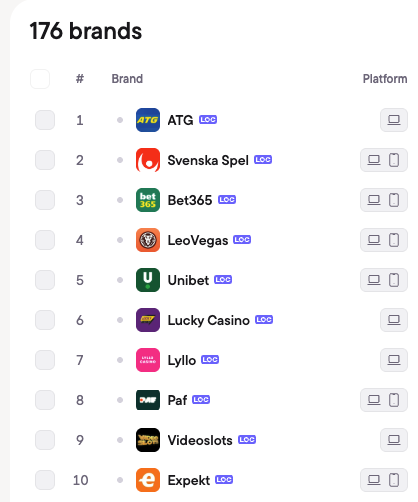
According to Blask analytics as of 30 March 2026, 176 brands are active in Sweden, 65 of which operate under an international licence. Local operators appear substantially stronger than international ones by Brand’s Accumulated Power (BAP), meaning they command a significantly larger share of market attention.

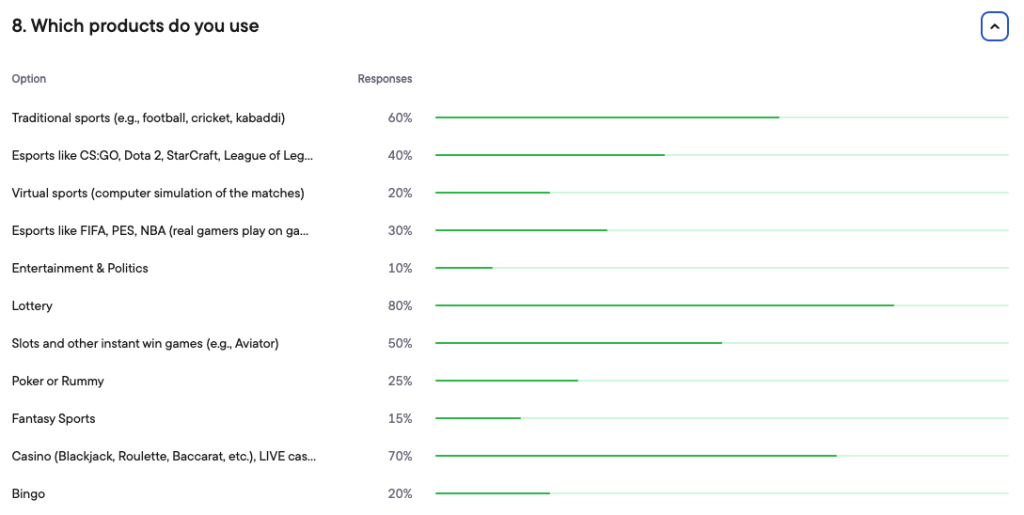
Blask also indicates that 30% of Swedish players are aged 25–34, while lotteries are the clear leading gambling product by popularity in Sweden.
What this means for the industry
The new publication does not introduce new fines or enforcement powers on its own, but it shows how Sweden will assess the accessibility of unlicensed gambling. For operators, it serves as both a warning and practical guidance: formal disclaimers are no longer treated as protection if a person in Sweden can participate in practice. Sweden is moving away from a model where disputes are centred on “targeting signals”. That is why the March Spelinspektionen document matters beyond Sweden: it translates the grey-market conversation from broad slogans into specific, enforceable control points — access, registration, payments, withdrawals and user terms.
This article was first published in Russian on 30 March 2026.
Don’t just read the news — stay ahead of it. Subscribe HERE to SiGMA’s Top 10 News countdown for stories shaping iGaming’s future, weekly insights from the world’s biggest iGaming community, and exclusive subscriber-only offers.


