


Watch: How smarter payments are reshaping operator growth strategies

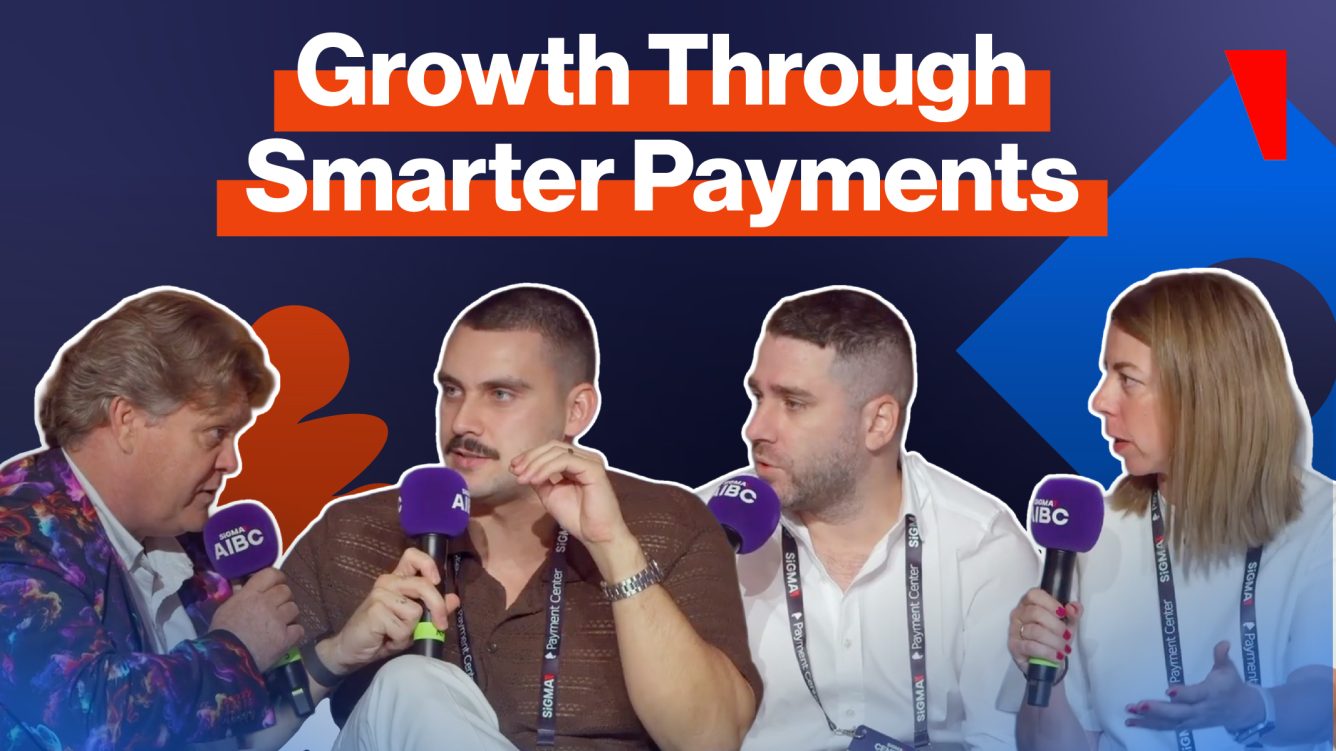
At SiGMA Central Europe in Rome this November, the panel titled Payments Strategy and Its Importance for Operators’ Growth, brought together industry leaders who discussed how payments have evolved beyond a simple operational cost, they now serve as a key driver of growth, enabling operators to boost revenue, improve player retention and innovate across new markets.
Moderator Julian Goffin guided the conversation with Gil Tal, Founder & CEO, PayConsult, Karolis Dula, Head of Payments, Alea, Laia Mena, Co-Founder & Director, Caliu and Rob Reid, Founder & CEO, Everest, exploring everything from operational efficiency and payment optimisation to instant settlements, crypto rails, embedded finance and regulatory challenges shaping the future of iGaming payments.
Growth drivers
Operators often treat payments as a backend necessity. However, as Karolis Dula, Head of Payments at Alea, argued, this mindset is outdated, “Payments are the continuum of acquisition and the start of player retention. You need to think about how you implement payments within your operations.” He emphasised that growth is not solely about traffic, it’s also about ensuring players can transact with the methods they use daily. Slow or inconsistent payment flows hurt conversion and invite players to leave for competitors who meet their expectations.
Gil Tal, CEO of PayConsult, reinforced this point with a simple example. A 10% increase in approval rates can unlock new markets, boost affiliate traffic, and meaningfully lift revenue.“If a player can’t deposit the first time, they’ll go to another brand. Payments done right unlock opportunities far beyond the payment aspect.”
When the discussion shifted to whether payment innovation is rebranding efficiency or creating true growth, Rob Reid, CEO of Everest emphasised the importance of operator tokens, “Acceptance rates up towards 98% change everything. When operators can let users buy an operator token, that becomes loyalty, that becomes breakage, and slowly but surely, they become the bank.” He argued that tokens create a new revenue layer similar to gift cards. And with operators increasingly offering wallets and real-time top-ups, the line between fintech and iGaming continues to blur.
Laia Mena, Co-Founder of Caliu, added that payment partners also reduce operational overhead through automated KYC, fraud controls and streamlined withdrawals, “It’s not just user experience, payments reduce headcount, reduce manual checks, and unlock better fees as volumes grow.” Efficiency generates capacity for scale.
Innovation and compliance
Innovation often moves faster than regulation, especially in areas like crypto and stablecoins. With the Genius Act and MiCA reshaping Europe’s regulatory landscape, Goffin asked how operators can stay compliant and innovative.
Tal emphasised that long-term resilience depends on building adaptable systems rather than relying on a single pathway. “The key is flexibility and diversity. You need multiple solutions in place. You can’t plan for every change, but you can prepare,” he explained.
In today’s environment, depending on a single PSP to manage the majority of traffic is simply too risky. Instead, operators must diversify, waterfalling transaction volumes, ensuring a healthy balance between fiat and crypto rails and adopting modular integrations that allow quick pivots when regulations shift. These strategies are fundamental safeguards for sustainable growth.
Instant payments and the future of banking
Dula predicted instant payments will soon be standard rather than a VIP perk. Cross-border stablecoin settlements are rapidly growing, approaching Visa’s global volumes and even SWIFT is looking for ways to connect to stablecoin rails.bHe pointed to PSD3, agentic payments and enhanced user-data flows as drivers shifting payment behavior across Europe.“We follow the charts. These technologies will influence how users spend on a day-to-day basis and operators need to meet that standard.”
To close, Goffin asked the panel if operators can ever stop being at the mercy of payment providers. Reid offered a decisive perspective, warning that operators who fail to take ownership of key parts of their operational stack risk falling behind. “If they don’t own a chunk of the operational stack, they’re newspapers in 1996. The bigger ones get it, they want their own wallets, their own monitoring, their own identity stack. That’s where the world is going.”
Across the panel, the message was that payments are no longer a support function. They are a strategic engine, driving acquisition, retention, compliance readiness and even new revenue streams. The operators who embrace this will grow. The ones who do not may soon find themselves disrupted.
For more expert discussions such as this, stay tuned for SiGMA South Asia in Sri Lanka 30-02 December where operators, affiliates, regulators and tech pioneers will take the stage for unmissable panels and keynotes.
The content presented on this page is strictly informational and intended for B2B purposes only. SiGMA Group is not responsible or liable for any business decisions, commercial agreements, or activities conducted by attendees, exhibitors, or third parties during or after the event. All participants are responsible for ensuring compliance with applicable laws and licensing requirements, including those of the Agenzia delle Dogane e dei Monopoli (ADM) in Italy. Our events are restricted to adults aged 18 and over.


