


What elite sport teaches about safer gambling resilience

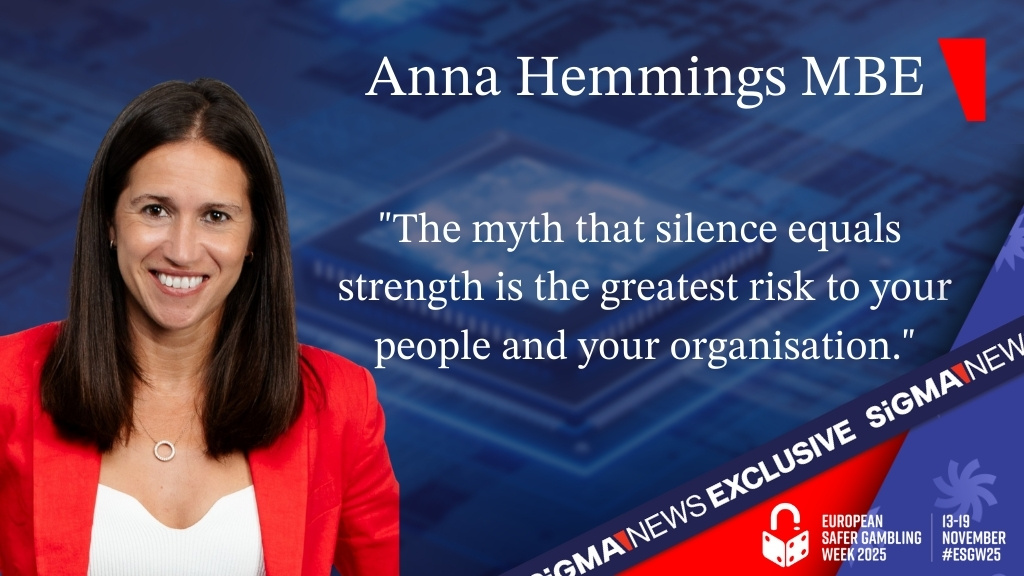
Some people learn about pressure in boardrooms. Others learn it on the flatwater lanes of world championship kayaking. Anna Hemmings MBE learned it on both, and the lessons she carried from that world now shape how leaders understand safer gambling resilience. Behind eleven World and European Championship medals, nine of them gold, lay a quiet world of pressure and silence, where identity and achievement begin to blend until they feel the same. By age 24, she had won the World Championship three times and competed at the Olympic Games.
Success can be dazzling from the outside, yet it often hides the strain beneath. What looks like composure in public can feel like isolation in private. That is where the real story begins — not with medals, but with understanding why people hide.
The same forces that mould elite athletes also press on leaders, teams, and people, carrying a quiet strain in high-pressure settings. The pull toward control, the longing for validation, and the habit of pushing on when something inside is fraying all point to the same truth. These patterns sit deep within safer gambling work and reveal that resilience asks for more than grit. It is the ability to see yourself clearly when the performance ends.
Anna’s story offers a mirror for the gambling sector. It shows how pressure forms habits, how silence takes root, and how recovery becomes possible when someone finally feels safe enough to speak. What she learned through illness, loss, and eventual rebuilding is now the foundation of her work with leaders through her consultancy Beyond the Barriers, where she coaches high performers, delivers leadership training, and speaks on resilience. Her insight helps us understand not only how people fall, but how they rise with honesty, support, and early intervention.
This is what elite sport teaches about safer gambling resilience, and why the lessons matter far beyond the podium.
This feature is the latest in our SiGMA News European Safer Gambling Week exclusive series, bringing together lived experience, regulation, psychology and sport to show what the industry often overlooks. Yesterday, Dominic Matteo revealed how identity, pressure and silence shape vulnerability long before harm is visible. Tomorrow, the UK Gambling Commission’s Deputy CEO, Sarah Gardner, concludes the series with a clear view on evidence, enforcement, and the future of consumer protection.
Why elite athletes understand the cost of silence
Elite sport rewards composure. It teaches you to keep your voice steady, your posture controlled, and your emotions hidden. Anna Hemmings learned that lesson early.
“I learned early that strength was something you showed, not something you felt.”
In that environment, silence becomes part of the job. The pressure is constant. The expectations are high. Even the slightest crack feels dangerous. Behind the medals, there was another story: fear, doubt, private strain, and the belief that coping alone was the only acceptable choice.
As Anna says, “Success teaches confidence, yet it also teaches silence.” And silence is where people begin to disappear.
This is the first mirror for the gambling sector. Not because the pressures are identical, but because the emotional choreography is the same. In high-pressure environments, people show strength before they feel it. They show composure before they find stability. They learn to hide what hurts because they believe their role depends on it.
Understanding that instinct is foundational to safer gambling resilience, because you cannot support someone if you cannot see the story they are trying to hide. And you cannot prevent harm if silence is the first language spoken.
What pressure teaches us about the self we perform
Pressure does not simply test identity. It shapes it.
In elite sport, the rhythm of training and competition quietly blurs achievement into worth. Anna names the belief clearly.
“I am what I achieve.”
It is a mindset that feels secure until uncertainty rises. Then it becomes brittle. Working with high-performing teams, Anna sees the same three coping patterns appear again and again.
Control: People tighten their grip on everything around them. Order becomes a shield.
Workaholism: Achievement becomes a refuge. Motion becomes protection. Exhaustion becomes normal.
Emotional compression: Feelings are pushed down until they disappear. Numbness becomes easier than honesty.
Each pattern offers relief, but only briefly. Each mirrors what we see when gambling becomes a tool for stability, escape, or emotional anaesthetic. Anna names the core mechanism behind all of them.
“The drive to outrun or overpower a difficult internal state.”
This is why early recognition matters. Coping patterns form in silence and often look like strength from the outside. Understanding them is a vital part of safer gambling resilience. It lets leaders see the beginning of strain rather than only its consequences. It brings the focus back to the human being rather than the behaviour.
Pressure teaches us the self we perform. Insight teaches us how to look beneath it.
What the breakthrough moment reveals about recovery
Every high-pressure life has a point where performance stops working. For Anna, that moment arrived during the two years she was unwell, when medics diagnosed her with Chronic Fatigue Syndrome at the peak of her career. Outwardly, she looked controlled. Inside, she was frightened, grieving the version of herself that illness had taken. Yet she told no one.
Her admission lands with quiet force.
“For eighteen months, I did not cry in front of anyone.”
Not when training stopped.
Not when the Olympics went on without her.
Not when she felt herself slipping from the identity she had built.
Silence was her armour until it became the weight she could no longer hold. The turning point was not a victory. It was not recovery. It was honesty.
“The day I took the mask off was the day I began my recovery.”
“I discovered a treatment called Reverse Therapy, and through those sessions, I realised that not expressing how I was feeling was contributing to the pain and fatigue.
“When I fully understood this and accepted it, I found the courage to pick up the phone and share with my sister how much I was struggling.
“I shared my fears and frustrations about the illness. She didn’t judge me, she just listened and was there for me.
“After that conversation, I took baby steps, slowly opening up to others, and I learnt the power of vulnerability. I discovered that vulnerability doesn’t push people away; it brings them closer.”
That moment did not weaken her; it returned her to herself. It gave others permission to see her, and it gave her permission to accept help.
Anna teaches that disclosure depends on three conditions:
A leader or peer who goes first.
A culture of psychological safety.
A foundation of trust.
Without these, silence calcifies. With them, recovery begins before harm deepens.
This is the deeper lesson behind safer gambling resilience. People wait because they do not feel safe, not because they wish to be strong. Leadership is measured by the courage to create environments where truth can surface early.
What resilience really looks like when the noise stops
Resilience is often mistaken for endurance. Keep going. Push through. Wear the mask until it fits. Anna learned the opposite. Real resilience begins when the noise stops and you must face who you are without the shield of performance.
When Anna recovered from the illness, she realised that if she wanted to return to the highest level of her sport, she needed to make time to listen. Time to understand the warning signs she had ignored. Time to rebuild from values rather than validation. She did. She returned and went on to win three more world titles, competing at the 2008 Beijing Olympic Games.
Her identity work followed its own steady route.
Values – what holds you steady.
Purpose – what lifts you forward.
Strengths – what you carry even when you forget you have them.
When these parts align, identity becomes wide enough to withstand pressure.
Anna’s resilience framework is practical.
- The determination to rise after setbacks
- The confidence to trust your judgement under strain.
- The self-awareness to sense when pressure is becoming stress.
- The discipline to prioritise rest and recovery.
- The willingness to ask for support.
- The focus on what can be controlled, not what cannot.
Her insight remains the pivot.
“Self-worth becomes inherent, not earned through performance.”
This is where resilience and safer gambling meet. People grounded in their identity are less likely to reach for control through harmful behaviours. People who are supported early are less likely to fall quietly.
Resilience is not toughness. It is clarity. And clarity is the beginning of prevention.
What leaders must choose to protect next
The final lesson in Anna Hemmings’ story is not about sport. It is about responsibility. Silence is not neutral. It carries weight. It carries risk. It carries harm.
Support systems must exist before someone needs them. Anna describes what effective systems require.
- Leaders trained to recognise early signs of struggle.
- Clear pathways for specialist support.
- Genuine psychological safety.
- Leaders who model vulnerability.
- Normalised access to mental health, financial, and debt support.
These elements form the groundwork for safer gambling resilience. They transform honesty from a liability into a shared practice. They create workplaces where strain is spotted early, not after the damage has spread.
A sector built on numbers and control needs emotional safety just as much as regulatory clarity. People cannot protect customers if they do not feel protected themselves. They cannot recognise risk in others if they are hiding their own.
Anna leaves leaders with the same message she shares in boardrooms, coaching sessions, and keynote stages.
“The myth that silence equals strength is the greatest risk to your people and your organisation.”
When workplaces make early truth easier than quiet suffering, resilience becomes real. It becomes shared. It becomes something that protects teams, customers, and culture in equal measure.
That is what elite sport teaches us. Not how to endure. How to rise.
This SiGMA News exclusive European Safer Gambling Week series opened with Grainne Hurst, CEO of the Betting and Gaming Council, on what consumer protection now demands, followed by Craig Cornforth of EPIC Global Solutions on lived experience as operational intelligence, and Liz Karter MBE on the clinical reality behind women’s gambling harm. Sport psychotherapist Lauren Vickery then examined public health and safer product design, while former professional footballers Clarke Carlisle and Dominic Matteo brought the human cost of silence, identity, and recovery into full view. Tomorrow, the UK Gambling Commission’s Deputy CEO Sarah Gardner concludes the series with a clear, evidence-led view of where consumer protection must go next.
Be part of the conversation shaping safer play. Subscribe HERE to SiGMA’s Top 10 News countdown for stories shaping iGaming’s future, exclusive interviews, and industry insights delivered straight to your inbox. Don’t just read the news, stay ahead of it.


