



Matt Zarb-Cousin, co-founder of the gambling-blocking software Gamban, spoke to SiGMA News about the growing threat of illegal gambling, the technical arms race against unregulated operators, and why regulators urgently need to catch up.
Tools like Gamban, BetBlocker, or Gamblock not only support individuals trying to quit. They also serve the wider gambling ecosystem. Licensed operators are required to provide self-exclusion schemes. Illegal sites aren’t. That gives black-market platforms a commercial edge and direct access to those who are actively trying to stay away. Broad, cross-platform blockers help close that loophole, protecting consumers while reinforcing a fairer market for operators who follow the rules.
From black market workarounds to new language rollouts, Gamban’s evolution reflects a troubling global reality: more and more people are looking for help to stop gambling. “It’s bittersweet,” Zarb-Cousin says of the company’s growth, particularly in countries with little or no regulatory protection for consumers.
A growing global demand, and a bitter truth
Matt Zarb-Cousin is calm, direct, and deeply familiar with the inner workings of both the gambling industry and the political machinery surrounding it. As co-founder and director of external affairs at Gamban, his work focuses on helping people restrict access to gambling websites and apps. But if there’s one thing he’s certain of, it’s that Gamban shouldn’t have to exist in the first place.
“But in the absence of effective regulation and in the absence of other alternative self-exclusion options, it’s better that it exists than it doesn’t,” he explained.
Gamban’s software is designed to be difficult to remove. Once installed, it prevents access to gambling content across devices and platforms. “We wanted to build something that was effective and reliable,” he said, adding, “It was the first gambling blocking software that worked on all platforms and operating systems.”
The demand is global. “We’re getting a lot of users at the moment in Brazil and the Philippines, and we don’t do any marketing there,” Zarb-Cousin revealed. “It’s kind of bittersweet because it shows that there’s a lot of gambling harm in those countries.”
In July alone, Gamban saw 6,000 new users in Brazil and similar numbers in the Philippines. “Every person who downloads Gamban is someone who wants to quit gambling and needs help to do so,” he said.
‘It’s like playing whack-a-mole’
Despite the rise of self-exclusion schemes in regulated markets, unlicensed operators are often quick to exploit the system.
“The black market gambling sites are targeting people who have signed up to the self-exclusion registers,” Matt Zarb-Cousin said. “It’s a deliberate strategy.”
And the black market adapts fast. “They will change the domain to try to bypass the software, and they’ll do that in a very systematic way,” he explained. “It’s like playing whack-a-mole. New sites just keep emerging.”
To keep up, Gamban relies on a mix of automation and crowdsourcing. “We’ve got over 300,000 domains, apps, and websites on the block list now, and it’s growing by about 300 a day,” he said. “We have a lot of different systems that can detect new gambling sites as they emerge.”
User reports are critical. “We’ve got just shy of 100,000 active users at the moment. We’ve had over 400,000 people use Gamban since we started. A lot of the domains that we identify have been reported by users.”
The team is also aware that operators are taking notice. “There’s even affiliate sites now that advertise ‘casinos not on Gamban’,” he noted wryly. “But it’s very easy for us to just scrape those and add them to the block list.”
Working with regulators, but not waiting on them
Governments and gambling regulators have been slow to act, according to Zarb-Cousin. In the meantime, Gamban has stepped in, often partnering with treatment providers and state-run monopolies to fill gaps in consumer protection.
In Finland and Norway, Gamban is now offered through the state monopolies Veikkaus and Norsk Tipping. “From their perspective, given it’s a monopoly, if you self-exclude from their sites, then you’ve self-excluded from the regulated market,” Zarb-Cousin explained. “So obviously all of their self-excluded players are vulnerable to unregulated gambling.”
In the UK, Gamban is part of a national partnership alongside Gamstop and GamCare. In the US, they are available in Ohio through the state’s self-exclusion scheme, Time Out Ohio. And in the Netherlands, a pilot scheme is currently underway with Loket Kansspel, funded by the Dutch regulator.
Despite growing public recognition and some regulatory collaboration, Zarb-Cousin said funding remains patchy. “There are different levels of funding available in different jurisdictions,” he explained. “In the more mature markets where gambling is legal and regulated, there tends to be more funding.”
Beyond blocking: a new focus on recovery
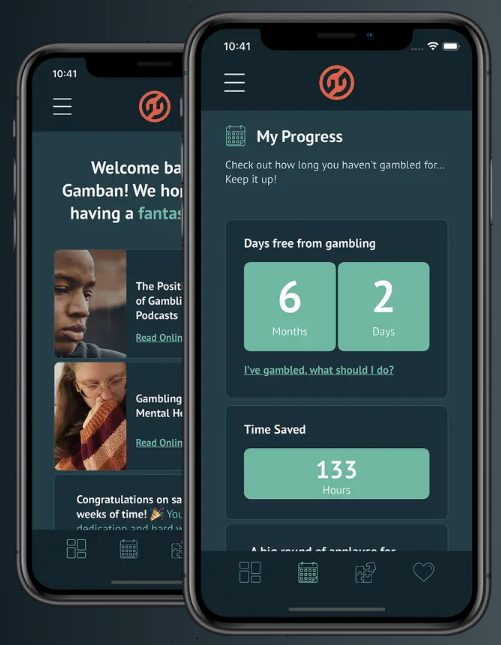
“We want to support people’s recovery as best we can,” Zarb-Cousin said. Recently, Gamban has expanded its scope, building in new support features and directing users to help services in their area.
“It’s really important to us that our mission is to help people quit gambling and recover from addiction,” he said. “But it doesn’t end there really.”
Users are encouraged to combine Gamban with other protective steps, including bank transaction blocks and helpline services. “Gambling blocking software is not a panacea. It’s not a cure for gambling addiction,” he said. “But it can help someone’s recovery.”
As part of an app redesign, Gamban will soon offer masked icons so users don’t have to worry about stigma. “We’re going to introduce new icons which will mask Gamban on the phone,” he said. “The software works in the background. The block page doesn’t say anything about Gamban, it just doesn’t load.”
They also aim to educate users. “What really helps with dealing with stigma is educating people on how they got addicted,” he said. “Sometimes addiction is by design… These platforms and products are optimised for engagement.”
Calling for updated regulation
Zarb-Cousin has long been vocal about the need for stronger gambling regulation. He called the current approach to online gambling in the UK, his country of residence, outdated and ineffective. “We need a different type of regulator, a different approach to regulation,” he said.
He criticised the statutory “aim to permit” in Britain’s gambling laws. “That really means that licensing authorities, whether that’s the Gambling Commission or local authorities, are not given enough discretion to issue or revoke licenses.”
What’s needed, he argued, is not just a tougher stance on product design but a change in how society understands harm.
Ultimately, Zarb-Cousin’s work is driven by a simple, urgent conviction: “Prevention for me can only really happen through regulation.” And until governments catch up, Gamban will keep filling in the gaps, one blocked website at a time.


