


PAGCOR needs allies to fight illegal gambling, expert says


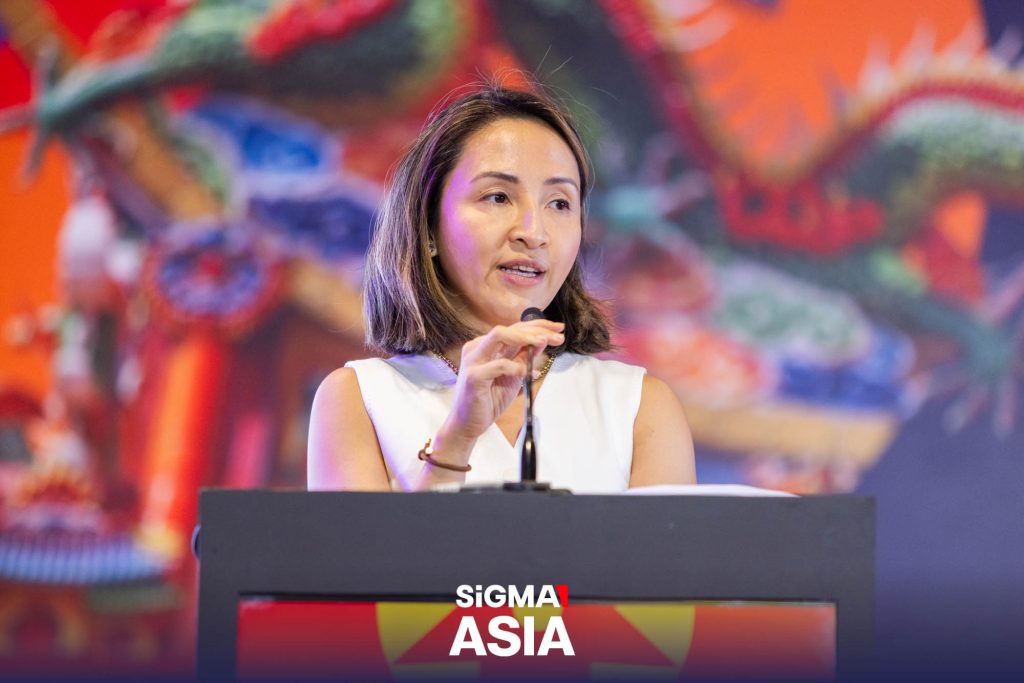
The Philippine Amusement and Gaming Corporation (PAGCOR) has been wrongly cast as the authority to shut down illegal online gambling, despite having no such powers, according to industry expert Marie Antonette Quiogue, founder of regulatory advisory firm Arden Consult. In a statement shared with SiGMA News, Quiogue said confusion over the agency’s mandate has allowed blame to be misplaced while illicit operators continue to thrive.
“Who really has the authority to shut down illegal online gambling sites in the Philippines? It is a question that continues to cause confusion — not only among the public, but even among legislators and officials directly overseeing the industry,” Quiogue said. “At one hearing, lawmakers pressed PAGCOR on why it had not simply pulled the plug on illicit gambling apps, as though the agency itself held police powers,” she noted.
During the hearing, PAGCOR Chairman and CEO Alejandro Tengco stressed the limits of the regulator’s reach. As Quiogue recalled, Tengco “was quick to clarify: PAGCOR has ‘no power to close illegal sites’ and can only refer cases to the proper enforcement bodies.”
“Yet the exchange revealed a deeper problem — even policymakers often misunderstand the scope of PAGCOR’s mandate,” Quiogue added. “This confusion has fuelled a public narrative that lays the blame at PAGCOR’s feet, when in fact the power to investigate, prosecute, and shut down illegal operators lies with law enforcement and other agencies: the NTC [National Telecommunications Commission] to block access, the DOJ [Depeartment of Justice] and NBI [National Bureau of Investigation] to build cases, the PNP [Philippine National Police] to make arrests.”
“By continuing to miscast PAGCOR as the enforcer, debate risks being trapped in the wrong frame — scapegoating a regulator with no police powers instead of strengthening the bodies that do,” Quiogue said.
Shadowy operators beyond reach
According to Quiogue, “beneath this misdirection lies the real issue: the unchecked growth of illegal gambling websites, many of them hosted overseas, that continue to siphon off untaxed revenue while exposing Filipinos to unregulated play.”
PAGCOR has identified “over 12,000 such sites,” she said, adding that “globally, even the most advanced enforcement agencies struggle to pin down the true operators of these platforms. They hide behind opaque ownership structures, offshore registrations, and constant domain shifts.”
On calls to summon site owners, Quiogue remarked: “These shadowy operators are illegal precisely because they are unaccountable — no one even knows to whom such an invitation could be sent.” She warned that “any gambling activity not sanctioned by PAGCOR or other appropriate agencies (e.g., PCSO for lotteries) is deemed illegal and subject to criminal prosecution.”
“Under these laws, operating or participating in unlicensed gambling is a crime – punishable by multi-year imprisonment and fines that escalate for repeat offenders or those with a larger role in the operation,” she added.
PAGCOR’s mandate as regulator
“PAGCOR was created as a regulatory and licensing body for gambling – not a police force,” Quiogue stressed. “Nowhere in its charter is PAGCOR given authority to conduct criminal investigations, make arrests, or unilaterally shut down establishments that it has not licensed.”
“In fact, by definition, any gambling activity outside of PAGCOR’s licence system is already illegal under Philippine law – meaning it falls to law enforcement agencies to act on it, not the regulator.”
“PAGCOR can penalise those it licenses (through fines, suspensions, or licence revocation), but it cannot arrest or prosecute unlicensed operators, because that is outside its jurisdiction,” she added. “PAGCOR has no armed units or cybercrime division of its own to raid clandestine gambling rings, and it cannot issue binding cease-and-desist orders to unlicensed entities without going through the justice system.”
“This clear delineation in the law is why PAGCOR often says its ‘hands are tied’ when faced with purely illegal gambling operations – it must refer those cases to authorities who have the power to enforce criminal laws.”
“At the end of the day, the current legal framework places PAGCOR in a critical but limited position: it is the gatekeeper for legal gambling and a key informant on illegal gambling, yet it relies on broader law enforcement machinery to actually crack down on the lawbreakers,” Quiogue noted.
PAGCOR’s levers against enablers
Quiogue stressed that PAGCOR still plays a crucial role by acting against accredited suppliers and licensed operators that enable unlicensed play. “While PAGCOR cannot raid underground gambling dens or summarily block websites on its own, it is not entirely toothless in addressing the online gambling problem,” she said. “Within the scope of its authority over licensed gaming, PAGCOR has a Compliance Monitoring and Enforcement Department (CMED) that keeps a close watch on all registered operators.”
“PAGCOR can impose administrative sanctions. These range from hefty fines and warnings, up to suspending or revoking the operator’s licence in severe cases,” she added. “Just as cutting access to capital cripples money launderers, cutting access to games and technology weakens unlicensed gambling operators.”
“Cutting off the supply of quality games and services to illegal platforms can deal a heavy blow to their viability,” she argued.
Whole-of-government and private sector action
“Smarter regulation — built on inter-agency coordination — offers the best path forward,” Quiogue said. “A whole-of-government approach is advisable to truly shut down illicit gambling operations and their enablers.”
She also stressed the private sector’s role. Earlier this month, a coalition of 19 licensed online gambling operators in the Philippines launched the PlaySafe Alliance of the Philippines, an industry group dedicated to promoting responsible gaming, enhancing regulatory compliance, protecting consumers, and combating illegal gambling.
“With the PlaySafe Alliance now formed, private sector stakeholders must continue stepping up — but this time with coordination and clear action items. Licensed operators and accredited providers can already share intelligence on illegal sites, partner with regulators and telcos, strengthen KYC and AML safeguards, and fund monitoring and public awareness campaigns,” she said. “The challenge now is to turn these efforts into concrete, collective action that shows the industry is serious about being part of the solution, not the problem.”
Payment restrictions drive players to illegal sites
Recent remarks from Tengco underline the urgency of smarter enforcement. He told lawmakers that online gaming transactions in the Philippines had dropped by about 50 percent following the Bangko Sentral ng Pilipinas (BSP) order, which required banks and e-wallets to sever links to gambling-related activities.
But the order also had unintended consequences as Tengco admitted that the restrictions have pushed more players towards unregulated platforms, estimating that 60 percent of operators catering to Filipino players are illegal, with many running websites hosted in Russia, Dubai, Abu Dhabi, and Cambodia.
He disclosed that PAGCOR is currently tracking about 12,000 illegal gambling sites compared with just 77 licensed platforms. Illegal operators, Tengco warned, lure players with larger bonuses and aggressive promotions that regulated firms are not permitted to offer.
The regulator is now studying new safeguards, including minimum deposit and betting requirements for licensed platforms to promote responsible play. Tengco stressed, however, that PAGCOR cannot act alone. “Without stronger enforcement measures,” he warned, “illegal operators will continue to thrive despite restrictions on legal platforms.”


