


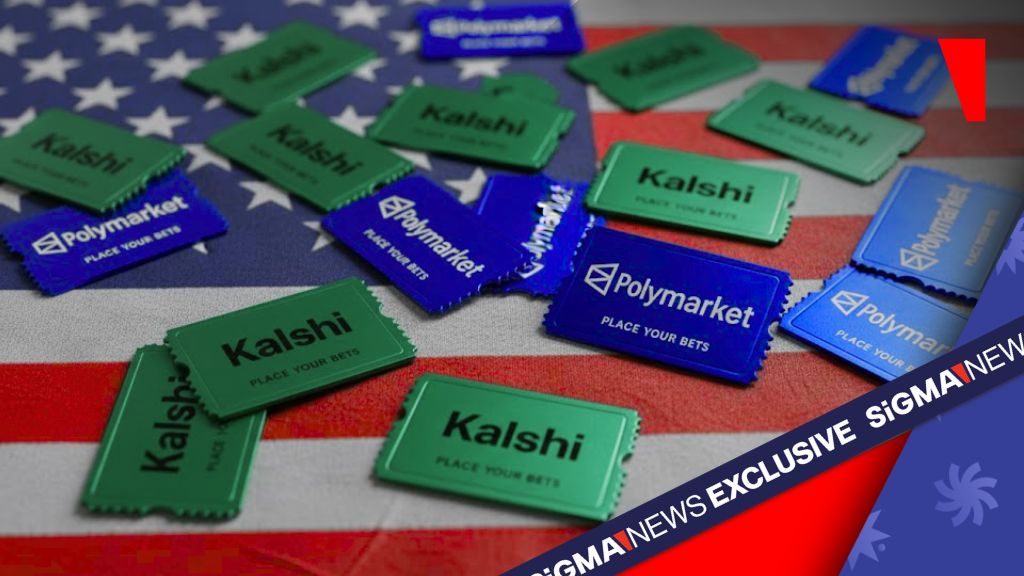
Prediction markets are rapidly gaining ground across the United States, as trading volumes soar and new entrants push the boundaries of regulated event-based investing. Platforms such as Kalshi and Polymarket have emerged as key players in a sector once considered niche, transforming public sentiment into measurable financial activity.
Recent data also shows their growing dominance. In September 2025, Kalshi recorded a monthly trading volume of $1.3 billion, marking a significant rise from previous quarters. The platform now controls around 62 percent of the global prediction-market share. During the week of 11–17 September 2025, Kalshi handled over $500 million in trades, with open interest averaging $189 million, surpassing its closest rival, Polymarket, which recorded $430 million in weekly transactions and around $164 million in open interest.
User base continues to surge
Despite being banned from 2022 until its eventual resumption, Polymarket continued to draw attention for engaging everyday users in political, sports, and financial forecasting. In January 2025, the platform reported 450,000 monthly active traders, a 91 percent rise from 235,000 in October 2024. Although its user base declined later in the year, analysts say these numbers signal a “significant mainstream shift” toward event-driven speculation.
Experts attribute this enthusiasm to a blend of social media culture and financial trading. Ever since Polymarket returned to the US, users are increasingly drawn to markets that allow them to monetise opinions on everything from presidential elections to sports outcomes. A KPMG research note earlier this year noted that prediction markets are “turning public debate into real-time price discovery.”
The US regulatory environment, long seen as fragmented, is gradually opening to the idea. Kalshi operates with approval from the Commodity Futures Trading Commission (CFTC), while Polymarket re-entered the American market by acquiring a licenced derivatives exchange. With Wall Street reportedly eyeing potential partnerships, prediction markets could soon occupy a more formal role in the financial ecosystem. However, many gaming platforms even fear that their rise could threaten traditional forms of gaming.
AGA rings alarm over predictors
At the Global Gaming Expo (G2E) in Las Vegas, the impact of prediction markets dominated discussions. The Venetian Expo in 2025 became a forum for debating how platforms like Kalshi are affecting state and tribal-regulated sportsbooks. The American Gaming Association (AGA) CEO Bill Miller issued a stern warning about their influence. Miller warned, “The AGA and our members are mobilising across every battlefield. They’re threatening the communities we serve, the customers and consumers we protect, and the standards we uphold.”
As per him, these platforms want the opportunity but no responsibility. “Why all this deception? It’s simple. They want the opportunity, but they don’t want any of the regulatory compliance. And they really don’t care about their concern for the public good, but these illegal actors aren’t fooling anyone.” He further added, “They call it innovation. I call it something else. It’s greedy, it’s reckless, and it’s irresponsible.”
States attempt to dampen influence
Concerns about prediction markets encroaching on traditional sports betting have been growing for nearly a year. These online platforms, federally regulated by a commodity-focused panel, operate across all 50 states, including regions without legal sports betting, such as California and Texas.
However, some states have openly flagged concerns over the rise of prediction markets. Recently, Ohio issued a licence threat to sportsbook operators, warning that involvement in prediction markets linked to sporting events could threaten their right to operate in the state. There has been a surge in lawsuits challenging existing US prediction market laws. Also, it shows growing unease over the rapid rise of these platforms that present themselves as financial instruments but operate, in essence, like betting exchanges.
Many of these cases are still making their way through federal courts, with legal clarity not expected anytime soon. But, according to industry experts, the deeper problem is that much of America’s gambling landscape already lies beyond regulation. The US is now running at 74 percent illegal gambling and 26 percent legal, a ratio that has remained unchanged this year.
“Youth doesn’t think they’re gambling. They genuinely believe they’re predicting and that makes these platforms so powerful”
– Ismail Vali, CEO and Founder of Yield Sec
In a recent conversation with SiGMA News over the issue, Ismail Vali, CEO and Founder of Yield Sec, was of the same opinion that illegal operators continue to dominate because of their accessibility and aggressive incentives. “Illegal gambling is everywhere. It’s every product — it’s sports, casino, poker, everything. They offer great promotions, they don’t pay tax, they don’t do licencing, they don’t check who you are, and that makes them easy and convenient for customers to use. Players may not get paid if they win, but nobody is thinking about that at the time of placing a bet,” Vali explained.
Prediction platforms, often called “predictors”, are expanding quickly across the US. While marketed as harmless forecasting tools, Vali said they are “simply another way of betting”. He explained, “It’s the same product in a different wrapper. You can call it predicting or forecasting, but at the end of the day, it’s betting on a future outcome.”
He criticised what he described as the inconsistencies of American gambling law. “The American law is insane,” Vali said. “Just because a state like California says there’s no online gambling doesn’t mean anything if everyone can still gamble illegally from their phones. The law is completely out of touch with reality.”
Crypto led to the birth of predictors
Tracing the origins of prediction markets, Vali noted that the trend began within the cryptocurrency world.“Prediction markets started on Binance and FTX around nine or ten years ago. It began with bets on Bitcoin and stock movements. But because it’s user-generated, it evolved fast. Soon, people were betting on sports, celebrities, and politics.” He further added, “You could sell someone Bitcoin once every few months, but you can sell them a predictor every 15 minutes,”
Vali forewarned that the under-30 demographic is especially susceptible to these platforms. “Under-30s don’t think they’re gambling. They genuinely believe they’re predicting. Whatever that means, but it’s not gambling when it absolutely is,” he observed.
Innovators of the ‘grey area’
He added that platforms such as Kalshi, Polymarket, and even Robinhood have taken advantage of this grey area. “They’re what I call the ‘innovators’. They saw the opportunity and moved in because the law hasn’t caught up. They’re winning court cases and expanding while regulators are still arguing about definitions,” he said.
Vali cautioned that without stronger enforcement, the legal gambling sector could be suffocated. “The American online gambling market is being squeezed on both sides. On one side, crime and illegal operators. On the other hand, innovators who call themselves legal but drain all the oxygen from the licenced market. Legal operators are suffocating in between,” he warned.
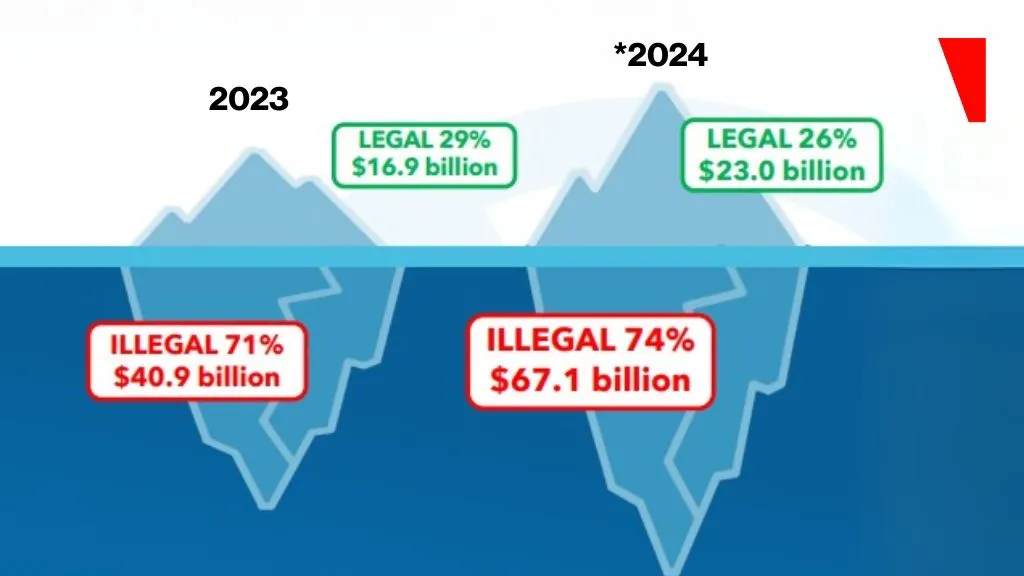
“If you don’t monitor, police, and enforce your marketplace, you can’t win,” he said. “The US is already losing 74 percent of its gambling market to illegal activity. If you now add semi-legal innovators who don’t pay the same taxes or follow responsible gaming rules, you’re not fixing the problem, you’re multiplying it.”
Rising visibility of platforms
Vali warned that the American gambling industry is facing its biggest threat ever, with illegal operators already controlling nearly three-quarters of the market. “Now you’re introducing another ingredient to it, which is also going to take oxygen away from the legals,” he said.
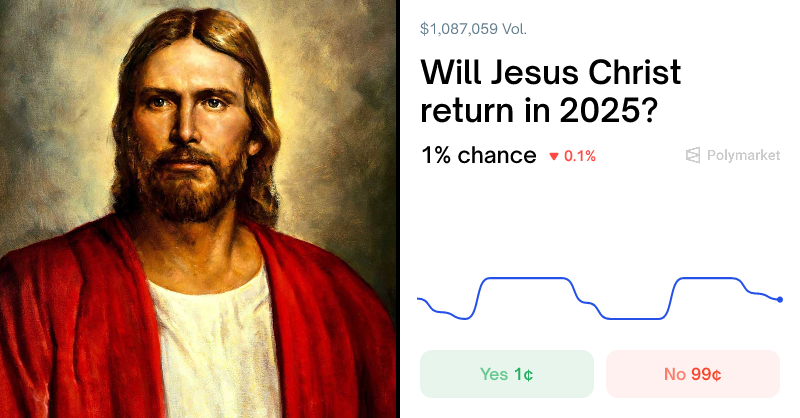
On the question of whether prediction markets are legal gambling or financial products, he added that platforms such as Kalshi and Polymarket are poised to profit unless regulators act swiftly. “Kalshi, Polymarket, and the rest of them are going to make money. I’m telling you today, no, you won’t unless you monitor, police, enforce, and optimise all of your marketplaces in America. And that is not being done today. So how the hell is it going to be done tomorrow?” he asked.
Vali noted that the visibility of such platforms has grown rapidly, fuelled by celebrity associations and social media exposure. “It’s everywhere. It’s the most noticeable in America because of the political and media debate, and because of Donald Trump’s son being involved with Kalshi. That’s what has led to them being famous,” he said.
He also pointed to their cultural reach. “The last South Park episode had Kalshi and Polymarket in it. I’ve never seen DraftKings or FanDuel in any South Park episode. That’s how much they’re part of the social conversation,” Vali said, warning that such normalisation is driving predictors deeper into the American market. In conclusion, he noted, “this stuff is global. And what happens in America will happen everywhere else very quickly.”
Prediction markets, or “predictors”, are fast blurring the lines between trading and gambling in the US. As experts say, with rising visibility, celebrity links, and cultural normalisation, experts warn that these platforms have an absolute chance to eclipse regulated betting. Unless authorities strengthen oversight and enforcement, the legal gambling sector may find itself outpaced and overshadowed by a new, largely free frontier of digital predicting.
Don’t just read the news — stay ahead of it. Subscribe HERE to SiGMA’s Top 10 News countdown for stories shaping iGaming’s future, weekly insights from the world’s biggest iGaming community, and exclusive subscriber-only offers.


