


Simon Westbury interview: A refreshingly honest take on iGaming strategy

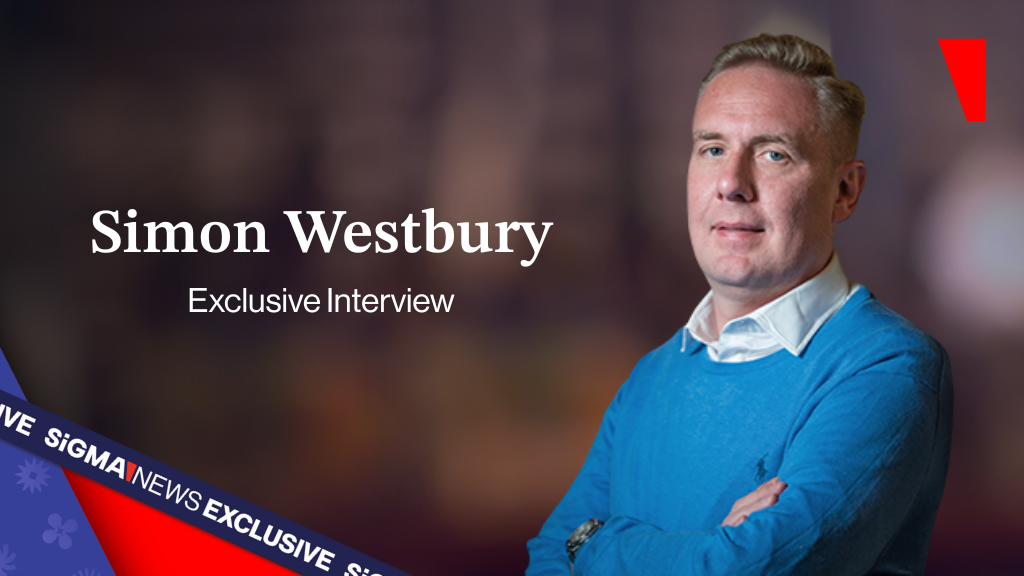
“I do feel we are belittling some job roles by handing out C-Level titles like sweets. Not everyone is born to be a manager, but everyone now thinks it is a right rather than something that is earned.”
With his recent appointment as Strategic Adviser at 1XBET, SiGMA news spoke exclusively with Simon Westbury to get a deeper understanding of strategy in the iGaming industry, what needs to change, and where the industry is headed.
With over 15 years in the global iGaming industry, from his fresh-faced days in sales to his role as CEO of Digitain’s Sport Generate, he’s pretty much seen it all. Being in the game as long as Simon has brings with it some wonderfully sharp and much-needed straight shooting. So, let’s have a little wander around his mind and learn why he’s hell-bent on the industry succeeding.
Q. In terms of general strategy in the iGaming industry, what needs to change?
I think there are a number of key components that need to change. We need to remember that we are intrinsically an entertainment industry, and our job is to provide engaging entertainment for the end user, the player.
There is always so much talk in the industry about innovation, but if we’re honest, how much innovation can we say has occurred over the last 10 years? Of course, there have been some successes, and I believe this comes down to the willingness to take risks, try new things, and find your differentiator; something that defines you as a company and can benefit the industry as a whole.
I think in the search for more revenues, we have actually become more risk-averse; trying to copy what is successful for others rather than being truly dynamic and doing something different.
Q. With tech and consumer preferences changing at such speed, what are the most important pivots that may not have been a priority five years ago?
Honestly, I do not think that as an industry we have really evolved in terms of pivots because we are still talking about the same things we were 5 years ago. There is a lot of noise around AI, but we were speaking about AI in 2019. A key question remains: what do we want from AI, and how can it benefit our business?
AI should be viewed as a tool to complement business, rather than a means of replacing existing processes and, potentially, people. I saw a great analogy on LinkedIn when someone compared AI to a dishwasher: it’s helpful and time-saving, but it still needs a human to load it.
As an industry, we are subject to what I call “trendyism”, that is the adoption of a trend or buzzword. I see so many AI-powered products now, but are they truly AI-powered, or just using the same automation with the “AI” tagline to appear relevant?
When it comes to trends, the golden oldies, as I call them, are gamification, regulation, and innovation. There is always talk about these, but how do we evolve with these trends, and how can we define what the next big thing is going to be? We’re all searching for the next disruption in gaming, but that comes down to risk-taking and being less vanilla. When I look at the industry, especially the B2B Platform side, I see little differentiation, mostly just imitation.
Finally, I think we have a challenge in terms of personnel in the industry now. Call me old-fashioned, but when I was younger, the key to my career was working hard: starting as a sales manager, hopefully moving to Head of Sales, and then the 1% made C-Level. The progression was based on delivering, driven by a passion for what you do.
Recently, I’ve seen that everyone wants to be a manager. They think it’s easier and they believe they need a team. I have posed this question many times: why do you need a team? Management is a great experience, and I always believe in career progression, but I do feel we are belittling some job roles by handing out C-Level titles like sweets. Not everyone is born to be a manager, but everyone now thinks it is a right rather than something that is earned.
The challenge will be in a few years when those who have been given these job titles to keep them happy in the company have not delivered, leaving a big hole in the sector. This leads to a very important point: as an industry we need to have some honest conversations with ourselves. In recent years, I am seeing honesty taking a back seat with style over substance taking hold.
Q. When expanding into new jurisdictions, what are the non-negotiables when it comes to strategy?
The non-negotiable is simply understanding the market you are entering and knowing that there is no one-size-fits-all solution. In the late 2000s, we saw a number of joint ventures between international bookmakers fail because they did not understand the local market or took an imperialistic approach to it, thinking that punters in Market A would bet the same as punters in Market B.
Understanding the market, localising your product to that market, but then also adding personalisation to different players is key. Markets differ but so do players within those markets. This takes a lot of hard work, and you need to be committed to every market you enter. Applying a blanket approach or a scatter-gun strategy and hoping something sticks will simply result in losses, both financially and reputationally.
I do not like stating the obvious, but you also need to ensure you are compliant with market regulations. I would always recommend engaging with the local regulator to try to build a relationship and work in partnership with them.
Q. What does the future of iGaming look like in terms of the products, consumption, audience, and regulation?
I am probably contradicting myself a bit here; after saying we are a bit sterile as an industry. However, I am not one to make predictions, simply because we do not know. For example, what would replace mobile gaming?
I hear talk of different types of immersive experiences, from glasses to virtual reality, but for me it’s about evolving, developing, taking risks, and then the next generation of products will come. These products will also need to appeal to the next generation; we are already seeing differences in betting patterns and habits.
Without stereotyping, my mates sitting in the pub on a Saturday, betting on an accumulator, will generally have a different outlook to Gen Z, who are looking for a different experience. This is why I always emphasise the importance of entertainment and appealing to your customers. There is no one-size-fits-all model.
One thing that’s for sure is that we will see more and more regulation coupled with the growth of grey and black markets. To some extent, as an industry, we have to take the blame for this, as I do not believe we have always effectively engaged with regulators to shape the regulations.
I think we have suffered from a reputational problem within society; we’re an industry that is now easy to target. Being cynical, you could argue that regulation was only really developed after the 2007 financial crisis as a way for governments to increase tax revenue.
When I started in the industry, my friends used to think it was exciting, and I will show my age here by saying that gaming was viewed as a “cool” sector to work in. This has changed, and I think we really need to start looking at how we can work with regulators to ensure that regulations not only protect players but also build a sustainable ecosystem that prevents the grey and black markets from developing further.
Of course, not all the blame lies with us as an industry, but I do believe the onus is on us to redefine our future in terms of our relationships with regulators and the players themselves.


