


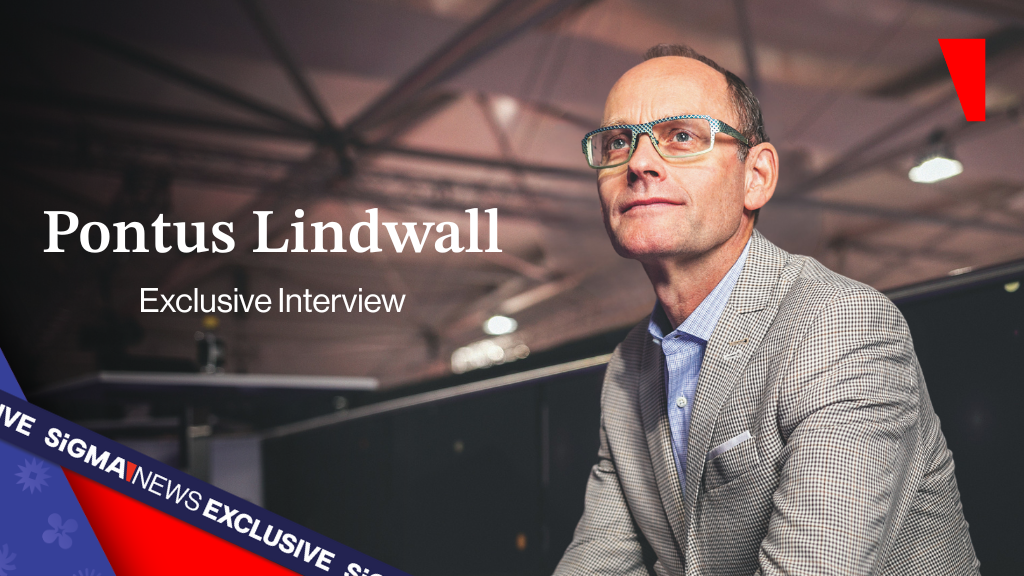
The OGs of Online Gaming, Part Two: Pontus Lindwall

The power of perseverance and propeller-hat nerds

It was the late ‘90s, and Pontus Lindwall was becoming acutely aware of the potential impact the internet would have on the world. At the time, he was part of an equally aware, tight-knit group of Swedish entrepreneurs; the original tech bros, before today’s tech bros ruined it for everyone with their boat shoes and over-dramatic TED talks.
“The late nineties, that was a very special time,” Pontus recalls. “Because at that time, only some people, a very small group, really understood that, wow, the internet is gonna change everything. It’s gonna change the way we interact. It’s gonna change the way we consume things. It’s gonna change the way we communicate, create businesses, everything.”
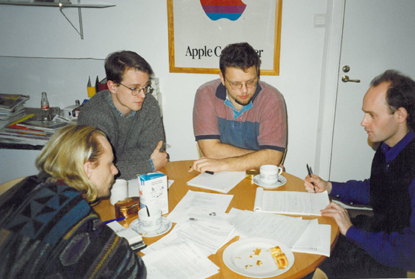
“There was a group of us in Stockholm,” he says. “We were all entrepreneurs who had started companies in different industries. There were regular bars that we went to on certain days of the week where we would meet and share our progress and what was going on with our projects.”
It was idealistic. It was hopeful. But more than anything, it was really, really exciting.
“We all understood that we were onto something here; that we could do almost whatever we wanted. If we managed to create it, it would become something.”
The crash that almost killed the dream
Of course, not everyone was sold on the Internet revolution. It’s hard to imagine now, but in the beginning, the public’s suspicion of the internet seeped into everything, even the web design choices.
“Before we launched, in the late nineties, people perceived the internet as something visually strange and aesthetically dark, that the people behind the web pages must either be criminals or propeller-hat nerds.”
“Eventually they got it and learned to trust a bit more, but at that time there were still a lot of sceptics.”
Then came March 2000.
“That was the end,” he says. “The so-called dot-com crash, where a lot of stocks lost their value, which in turn put a hard-stop to a lot of the financing.”
It wasn’t just the market taking a hit. The cultural tide turned, too. Politicians who had been silent suddenly had opinions. “There was even a Swedish minister at the time who said that the internet was just a fad. That it had come and gone and wasn’t going to be this big revolutionary thing that everyone thought it would be.”
A whole generation of promising dot-com businesses collapsed almost overnight.
“There were a lot of companies, good companies with good ideas, that were well on the way to success, and they went bankrupt,” Pontus says. “They didn’t get any more financing.”
From the ashes
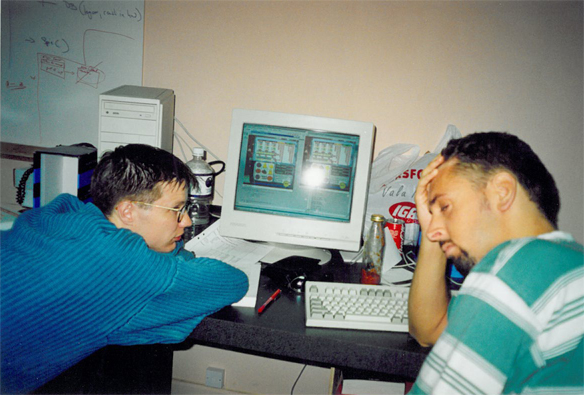
It was a close call, but NetEnt survived.
“We were small enough, and we had owners who still believed in the internet and what it could do,” Pontus explains. “So we scaled down a bit and made sure that the negative cash flow wasn’t that heavy. And they gave us the financing to continue.”
But, still, it wasn’t an easy time.
“We saw the figures going in the right direction, but not as fast as we were hoping,” he says. “And when you get all this pressure from the outside, the board, then, yes, there were definitely times when I started to question it myself: is the internet going to be something? Was I too optimistic about people being able to trust a service like this?”
But they pushed on, and sometime during 2002, they were cash flow positive, and have remained that way ever since.
Betsson enters the chat
By the early 2000s, NetEnt was standing on solid ground. The products were working, the company was stable, and the early chaos had been replaced by a sense of real structure.
Which, of course, meant Pontus needed a new challenge.
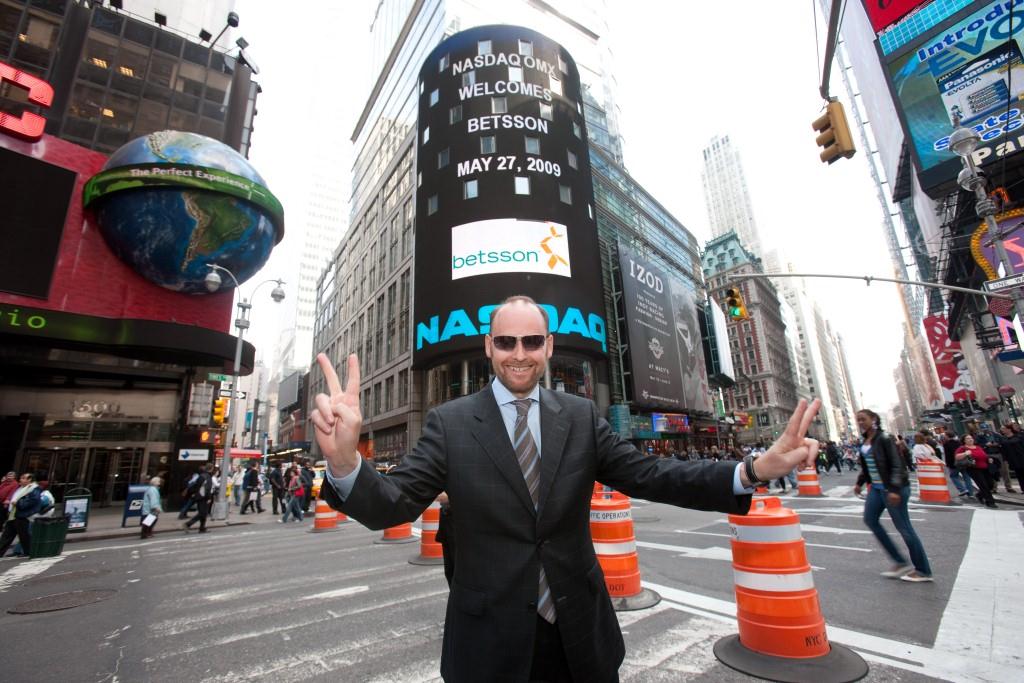
He had agreed to finance a new Swedish gaming site called Betsson, which took off pretty quickly. In 2005, Betsson was formally acquired by Cherryföretagen AB – the company led by Pontus, which also at the time was the mother company of NetEnt.
“We had a B2B port (NetEnt) supplying casino games to many operators as well as our own brands and, of course, the Betsson brand. But we started to realise that some of our customers on the B2B side didn’t really appreciate that we were using the money they were paying us for the games to invest in Betsson.com, essentially competing with our clients.”
Cheeky.
“I mean, they had a point,” Pontus admits, “So we decided to restructure a bit, dividing the company into three parts. One being the B2B part that was distributed to the shareholders. One land-based part, Cherry, that was also distributed to the shareholders. And then we kept Betsson as the B2C operator.
“That’s where the journey really started for Betsson as a standalone company with ambitions to become a global B2C operator.”
And the rest, as they say, is history.
A lesson in trusting your gut
Today, Betsson is a household name in the gaming industry. But back then, it was quite the bumpy ride. There was no framework, no defined regulations, no industry conferences about “scaling your gaming vertical.” It was just a small group of razor-sharp companions who believed, even when the market didn’t, that they were onto something.
Although under different names and activities over the years, Betsson has been around as a gaming company since 1963 and now operates across 24 regulated markets, employs over 3,000 people, and is publicly listed; a legacy that began with Pontus’ belief in the power of technology, eventually securing its place as a steadfast leader in today’s thriving iGaming industry.
It really is amazing how far an unwavering faith in tech, impressive entrepreneurial flair, and a motivational beard can take you.
Missed part one of the Pontus interview? You’ll find it here.


