


Prediction market titans form coalition for federal rules

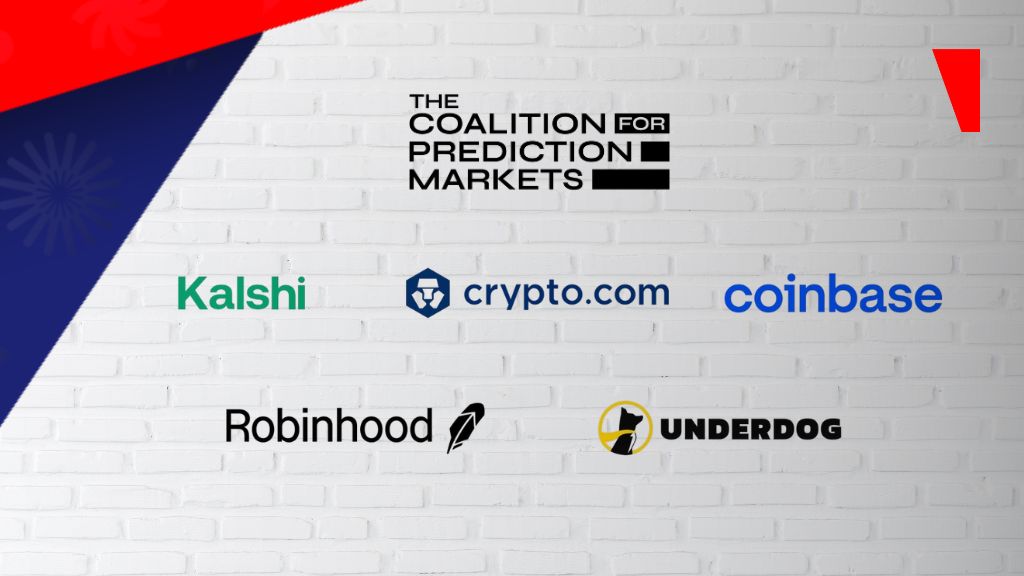
Kalshi and Crypto.com have formed a new national industry body, the Coalition for Prediction Markets (CPM), bringing together major platforms including Coinbase, Robinhood, and Underdog to advocate for federally supervised and transparent access to prediction markets across the US.
The move comes amid rapid growth in the sector. Prediction markets have surged into the mainstream over the past year, with nearly half of Americans under 45 reported to have used an online financial or prediction market, according to a Kalshi poll. With trading volumes reaching a reported $28 billion through October, Kalshi alone logged $4.4 billion in trading volume for the month.
Push for federal oversight as states eye expanded authority
The coalition argues that prediction markets function as real-time indicators of public expectations, outperforming traditional polling by around 30 percent. Supporters say they now serve as a key tool for interpreting political, economic, and cultural shifts, and for allowing individuals to monetise expertise in a way that broadens financial participation.
However, as some state-level casino regulators seek to establish control over a sector traditionally governed by federal commodities law, CPM’s introduction also shows growing industry worry. According to the coalition, a fragmented state-by-state system risks driving consumers towards offshore operators and undermining existing safeguards designed to prevent insider trading and ensure market integrity.
Industry leaders call for national standards
“The US is the biggest frontier for prediction markets, and the momentum we’re seeing makes a unified industry voice not just important, but necessary,” said Matt David, Executive Board Member of the Coalition and President of North America & Chief Corporate Affairs Officer at Crypto.com.
Today we launched the Coalition for Prediction Markets @PredictAction alongside Cryptocom, Robinhood, Coinbase, and Underdog.
— Tarek Mansour (@mansourtarek_) December 11, 2025
Millions of Americans have become active users of prediction markets, whether they trade or learn from the forecasts. These markets have emerged as the… pic.twitter.com/Dy7BmSym5k
He described prediction markets as “a new layer of civic infrastructure” that helps institutions and the public make more informed decisions. Kalshi’s Sara Slane, also an Executive Board Member of CPM, said federal clarity is essential as adoption accelerates: “Americans deserve clarity, not 50 conflicting interpretations. As the first federally regulated prediction market, Kalshi saw firsthand how quickly this space was growing – and how urgently a unified industry voice was needed.”
Coalition priorities: Guardrails and consumer access
CPM intends to concentrate on strengthening the federal framework that oversees prediction markets, including national guidelines to stop insider trading, uniform transparency and surveillance practices, safeguarding markets connected to elections, sports, and economic indicators, and avoiding regulatory overreach at the state level.
Participation from major fintech firms underscores the sector’s alignment with federal oversight. Coinbase Chief Policy Officer Faryar Shizad said prediction markets “democratise fact-finding and the pursuit of truth,” adding that Coinbase is “proud to join the Coalition for Prediction Markets.”
With interest surging and regulatory pressure mounting, CPM is positioning itself as the central voice advocating for a cohesive national structure, one designed to preserve innovation while ensuring markets remain safe, compliant, and accessible to the public.
A Kalshi spokesperson told SiGMA News, “It’s critical that prediction markets remain squarely within the CFTC’s control to provide the uniform transparency, market integrity, and consumer protections that have long underpinned global trust in US financial markets. The Coalition for Prediction Markets will promote fair, safe, and open access to prediction markets.”
What’s happening and why it matters?
Prediction markets allow users to trade “event contracts” on outcomes spanning sports, elections, economics, entertainment, and more, often crossing traditional state-licensed gambling jurisdictions because they’re regulated federally under CFTC rules.
The space has grown quickly across the US, attracting both retail and institutional interest. Over the past two years, the US prediction-markets space has exploded with entrants. These include PrizePicks, Underdog, Novig, and President Donald Trump’s Truth Predict. On 3 December, Fanatics launched its own platform across 10 states, including Delaware, South Dakota, and Utah. The prediction fever has spread to the UK as well, with Matchbook set to launch a new prediction market platform this January, marking a major strategic step as the betting exchange gears up to compete with US operators Kalshi and Polymarket.
US sportsbooks are also eyeing this space, DraftKings has moved closer to launching its DraftKings Predictions platform in the United States after receiving crucial federal approvals from two major regulators. Rival operator FanDuel is partnering with CME Group on a new event-contracts joint venture.
However, state regulators in Connecticut, Massachusetts, and other jurisdictions have issued cease-and-desist orders and lawsuits, arguing that certain prediction markets, especially those tied to sports, fall under state gambling laws. CPM’s launch comes as the industry faces pushback from traditional gaming lobbyists and regulators who say these platforms are unlawful or equivalent to unlicensed sports betting.
Industry friction
The formation of the coalition highlights a growing rift in the gambling world. At the Global Gaming Expo (G2E) in Las Vegas, the impact of prediction markets dominated discussions. The Venetian Expo in 2025 became a forum for debating how platforms like Kalshi are affecting state and tribal-regulated sportsbooks.
The American Gaming Association (AGA) CEO Bill Miller issued a stern warning about their influence. Miller warned, “The AGA and our members are mobilising across every battlefield. They’re threatening the communities we serve, the customers and consumers we protect, and the standards we uphold.”
In contrast, companies like DraftKings, FanDuel, and Fanatics have exited traditional industry groups like the AGA as they pursue their own prediction market services. Fanatics was the latest one to exit. The company launched Fanatics Markets on 3 December 2025 and withdrew from the AGA a week later due to disputes over prediction markets.
Subscribe HERE to SiGMA’s Top 10 News countdown and SiGMA’s weekly newsletter to stay up to date with all the latest iGaming News from the biggest iGaming community in the world and benefit from subscriber-only offers.


