


Lithuania continues to revise its gambling framework and tighten market oversight. On 2 April, the Ministry of Finance submitted a draft amendment package to the government proposing to make a so-called “player card” mandatory for everyone, from visitors to land-based gaming halls to users of online platforms. The system would centralise data on deposits and winnings so the state can gain a full picture of player behaviour. The package also proposes phasing out cash transactions, revising certain operator requirements, and expanding the supervisory authority’s powers.
The initiative fits Lithuania’s existing policy direction. As SiGMA previously reported, advertising and sponsorship restrictions have been in force since 1 July 2025. Many sports clubs changed their names to comply with the new rules, and the number of blocked illegal platforms has already reached the thousands. The “player card” would be the next step in the state’s tightening regulatory approach.
How the player card would work
In essence, the player card would serve as a unified access system – but not in the sense of a club-style card that grants access to play. It is a tool used to record the amounts a player deposits and the winnings they receive. This allows the state to track a person’s activity regardless of which operator they use. If someone reaches a limit or shows risky behaviour, switching operators would no longer conceal their activity.
The player card is a key tool for implementing responsible gambling policy. It strengthens the prevention of gambling addiction and ensures that our main goal – reducing access to gambling and the potential harm to health – is delivered in practice.
Kristupas Vaitiekūnas, Lithuania’s Minister of Finance
Alongside the player card, the government also proposes:
- gradually phasing out cash in gaming halls and for paying out winnings;
- reviewing certain requirements placed on operators;
- expanding the powers of Lithuania’s Gambling Supervisory Authority (LPT).
The stated aim is to build a system that monitors the entire player journey – from access to the game through to the payout stage.
When the changes would be implemented
The reforms are planned as a phased roll-out. Amendments related to the supervision of operators and the removal of some requirements are expected to take effect from 1 May 2027. The provisions covering the player card and the transition away from cash are planned for 1 January 2029. Operators would be given three years to upgrade equipment and move to cashless payments; the Ministry of Finance describes the project as technically challenging.
Why has the proposal emerged now?
The main driver is Lithuania’s rapidly expanding market. In the first half of 2025, gross gambling and lottery revenue reached €131.5 million, with €96.1 million generated online. Over the last 15 years, Lithuania’s gross gambling revenue (GGR) has increased more than fivefold.
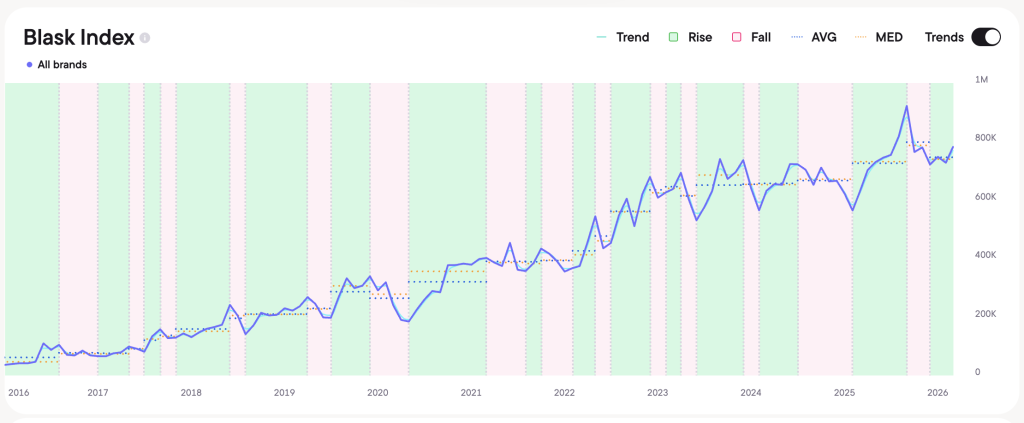
According to Blask data as of 5 April 2026, Lithuania’s Blask Index – a measure of market interest in the iGaming sector – is rising steadily. In March 2025, it stood at 627.7k, and a year later, it reached 781.6k.
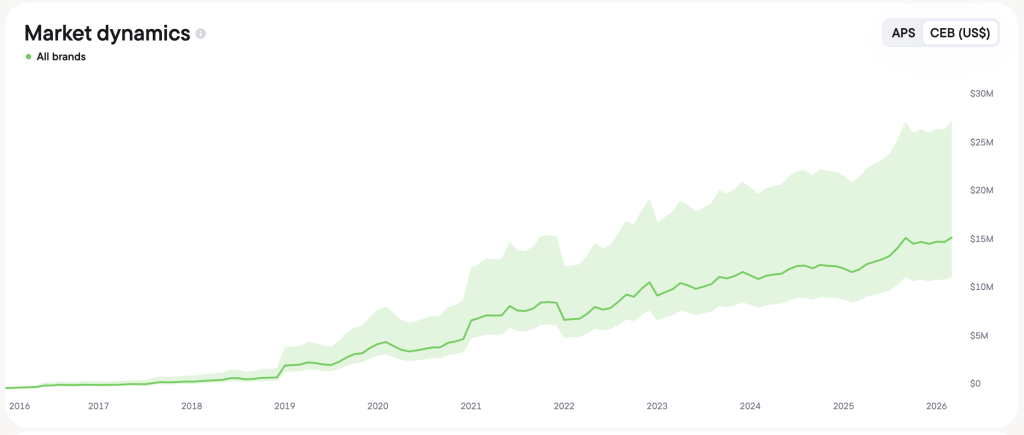
Market dynamics, measured by CEB, an indicator that estimates approximate monthly country revenue, also show positive momentum. In March last year, it was assessed at $12.33 million; in 2026, it stood at $15.68 million.
At the same time, the amendments that took effect on 1 July 2025 have already reshaped the advertising landscape. Outdoor gambling advertising has nearly disappeared (only a name and trademark may be displayed). TV and radio face strict limits on duration and frequency — for example, ads must not exceed 15 seconds. Online advertising must be static and must not include links directing users to operators’ websites.
Self-exclusion statistics are also feeding into policy. According to LPT, around 20,000 Lithuanians are currently self-excluded. Against a population of 2.8 million, that is a material number.
In this context, the player card proposal becomes another step towards centralised oversight. The government appears intent on strengthening supervision over a fast-growing gambling industry and more tightly regulating player behaviour in the online space.
This article was first published in Russian on 6 April 2026.
Subscribe HERE to SiGMA’s Top 10 News countdown and SiGMA’s weekly newsletter to stay up to date with all the latest iGaming News from the world’s iGaming authority, and benefit from subscriber-only offers.


