


Mergers loom as new rules reshape Philippine iGaming


A wave of mergers and realignments is set to sweep through the Philippine iGaming sector as tougher regulations take effect this year, with operators reassessing their structures ahead of new requirements coming into force in April.
Speaking exclusively with SiGMA News, Atty. Anthony “Tony” Manguiat, President of HHR Philippines Inc., said the latest policy shifts under the Philippine Amusement and Gaming Corporation (PAGCOR) are pushing the market towards consolidation, particularly among companies offering only a single service.
Direction of Philippine regulation
For Manguiat, any discussion about consolidation must begin with a clear understanding of what iGaming is and what regulation is meant to do. He defines iGaming simply as the “online gambling betting industry” and views PAGCOR’s approach as deliberate rather than punitive.
“My opinion is PAGCOR is going for more regulation, not to curtail the industry, but to grow it,” he told SiGMA News. “The regulation is geared towards growth.”
According to Manguiat, tighter oversight is aimed at dismantling long-standing assumptions about licensing. “I think PAGCOR is trying to weed out the impression that if you get a licence, you have the right to print money,” he said.
In his view, the regulator’s goal is to bring order and scalability to a fragmented market. “Right now, I think PAGCOR is regulating for growth,” he said. “They’re coming out with these regulations to be able to monitor the industry better and to be able to grow it faster.”
Manguiat stressed that oversight should not be seen as hostile. “We don’t treat PAGCOR as a threat. We treat PAGCOR oversight as consumer protection,” he said.
MGF pressure and why consolidation is unavoidable
One of the clearest drivers of consolidation is the Minimum Guarantee Fee (MGF), which has raised concerns about the survival of smaller operators. Manguiat acknowledged that the pressure is real and that HHR itself is not immune.
“We are a small company. So, it will affect us,” he said. “But, we would have to compete. So we must adapt to the regulations.” He was careful to position HHR relative to the market’s largest players, and he said that the company needs to adapt.
That adaptation, he noted, is already reshaping the sector. “Right now, if you will notice, there are mergers and alignments,” Manguiat said. “The players, the industry movers, are realigning.”
Rather than viewing consolidation as a failure, he sees it as a rational response to scale requirements. “Not necessarily smaller,” he said when asked who would be forced to merge. “But if you’re just offering one service, to stay competitive, you’d have to merge your operations with others.”
April regulations and licence merging
Manguiat expects consolidation to accelerate once the next round of regulations takes effect in April.
“By April, there’s a new regulation,” he said. “I think the licences will be merged.”
He does not expect a mass abolition of permits, but a restructuring of how they are held and combined. “I’m not saying it will be abolished,” he said. “I think most licences will merge.”
He outlined scenarios where different verticals are combined. “Maybe some sports betting companies will merge with an e-casino e-gaming licence. And then maybe some bingo licences will merge,” Manguiat said.
Describing the coming framework as “a very stringent regulation”, he added: “We’ll see it in April.”
Preparing for scale: Influencers and digital talent
As companies adjust to a more consolidated market, Manguiat said HHR is expanding its approach to customer engagement by integrating digital talent, such as streamers and influencers, into its overall strategy to enhance reach and relevance.
“We’re inviting the talents of the digital world to join us and be part of the regulated gaming industry,” he said. “The talent is undeniable.”
Streamers and influencers, he argued, are already embedded in Filipino online behaviour. “It’s already part of our culture and part of this new generation,” Manguiat said. “To close your eyes and not include them in your plans would be a mistake.”
HHR’s strategy is to bring these creators into a regulated framework rather than leaving them outside the system. “We’re opening up our corporate arms to all the talents of streaming and to all the influencers to join us in the regulated market,” he said.
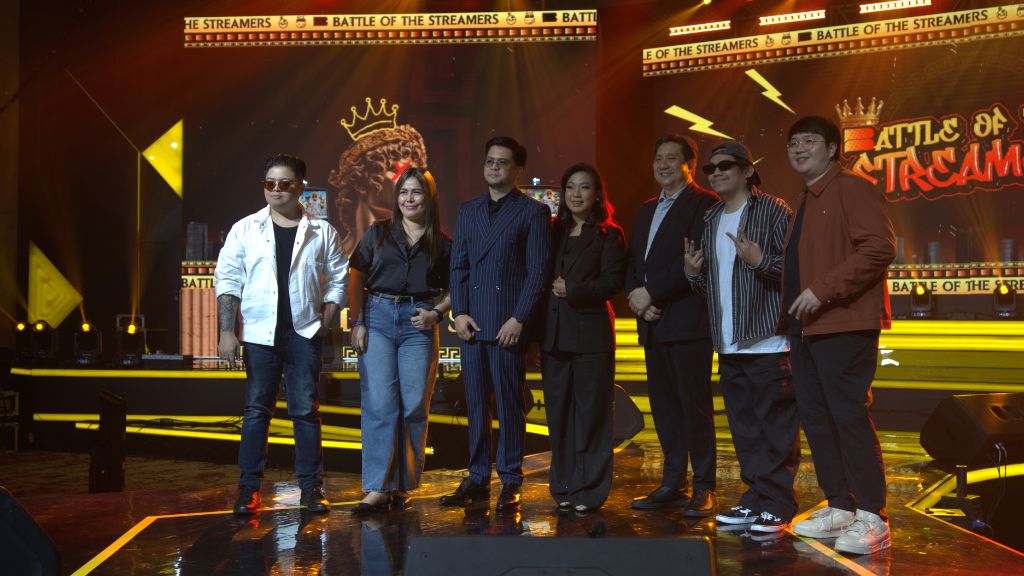
On Sunday, Buenas PH, the licensed e-casino operator under HHR Philippines, launched its strategic partnership with some of the country’s biggest streamers and gaming ambassadors to promote the future of regulated and responsible iGaming in the Philippines.
Responsible gaming as a condition for survival
With online gaming participation continuing to rise, Manguiat was emphatic that responsible gaming is not optional.
“Responsible gaming is key to keeping us in business,” he said. “If we do not promote responsible gaming, Congress will shut us down.”
Manguiat pointed to measures already in place. “You can exclude yourself, your family can exclude you, and stricter KYC,” he said, along with minimum deposit requirements. He rejected outright bans as ineffective. “We should not prohibit online gaming. We should regulate it,” he said.
Looking overseas, he noted that other jurisdictions are expanding rather than retreating. “The United States already opened its online gaming industry. Six states have it already,” he said.
His concern is capital flight. “If you prohibit it here, technology will allow Filipinos to just place their bets in other countries,” Manguiat said. “Regulate it now. And keep the money in the country.”
Brick-and-mortar as part of consolidation strategy
Consolidation is not only about licences, but also about business models. Manguiat said operators can no longer choose between land-based and online. “Online and land-based? You have to be both,” he said. “You have to be.”
Under current rules, online licensees must service a minimum number of physical outlets. Manguiat said there are between 1,400 and 1,600 gaming halls nationwide, with HHR already active in close to 50.
“Our brick-and-mortar machines are fed through online software,” he said. “These online games are streamed from abroad and are licensed by PAGCOR.” Manguiat shared that HHR is deploying machines in partnership with the Association of Licensed Gaming Operators of the Philippines (ALGAO). “You can’t just be online anymore,” he said.
Transition before growth
For 2026, Manguiat expects consolidation and adjustment to dominate the first half of the year. “There will be a transition for the first six months of this year because of the new regulations,” he said.
He pointed to the sharp revenue impact of recent changes. “PAGCOR’s online gaming revenue dropped by 49 percent,” he said. “That’s a big drop.”
For Manguiat, patience is required. “Let’s see after six months,” he said. “Transition first, then we talk about growth.”
What is clear, Manguiat concluded, is that mergers, compliance, and adaptability are no longer optional. In a more tightly regulated Philippine iGaming market, consolidation is becoming the price of staying in the game.
Stay ahead of iGaming’s biggest stories with SiGMA’s Top 10 News countdown. The world’s biggest iGaming community brings you weekly insights and subscriber-only offers. Join HERE today.


