


US sanctions casinos-turned-scam compounds in SE Asia

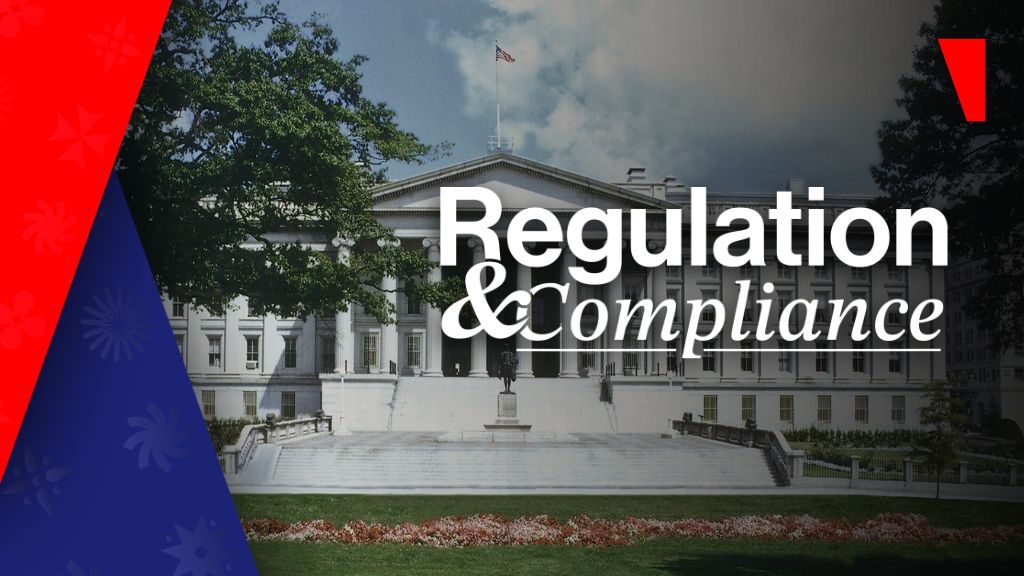
The United States Department of the Treasury announced on 8 September that its Office of Foreign Assets Control (OFAC) had imposed sanctions on a “large network of scam centres across Southeast Asia that steal billions of dollars from Americans using forced labour and violence.”
The action includes nine targets operating in Shwe Kokko, Burma, described as “a notorious hub for virtual currency investment scams under the protection of the OFAC-designated Karen National Army (KNA), as well as ten targets based in Cambodia.”
“Southeast Asia’s cyber scam industry not only threatens the well-being and financial security of Americans, but also subjects thousands of people to modern slavery,” John Hurley, Under Secretary of the Treasury for Terrorism and Financial Intelligence, said. “In 2024, unsuspecting Americans lost over $10 billion due to Southeast Asia-based scams, and under President [Donald] Trump and Secretary [Scott] Bessent’s leadership, Treasury will deploy the full weight of its tools to combat organised financial crime and protect Americans from the extensive damage these scams can cause.”
Cyber scams targeting Americans
The Treasury highlighted that “transnational criminal organisations (TCOs) based in Southeast Asia are increasingly targeting Americans through large-scale cyber scam operations.” A U.S. government estimate found that “Americans had lost at least $10 billion in 2024 to Southeast Asia-based scam operations, a 66 percent increase over the prior year.”
“Southeast Asia-based criminal organisations often recruit individuals to work in scam centres under false pretences. Using debt bondage, violence, and the threat of forced prostitution, the scam operators coerce individuals to scam strangers online using messaging apps or by sending text messages directly to a potential victim’s phone,” the Treasury said.
Treasury added that scam victims are often lured into “purported ‘investments’ in virtual currency on websites that are designed to look like legitimate investment platforms but are actually controlled by the scammers themselves.”
Previous Treasury actions
The department explained that the designations follow earlier steps against scam operators. These included the 29 May 2025 sanctioning of Funnull, which “sold IP (internet protocol) addresses in bulk to cybercriminals to operate scam websites.” On 5 May, OFAC designated the KNA as a TCO, alongside its leader Saw Chit Thu and his sons, “for their roles in facilitating cyber scams that harm U.S. citizens, human trafficking, and cross-border smuggling.”
On 1 May, FinCEN identified Huione Group as “a primary money laundering concern pursuant to section 311 of the USA PATRIOT Act.”
In September 2024, OFAC also sanctioned Cambodian tycoon Ly Yong Phat, his conglomerate L.Y.P. Group, and “four of his hotels and resorts for their role in serious human rights abuse related to the mistreatment of trafficked workers in scam centres.”
Scam centres in Shwe Kokko
The sanctions list highlights Shwe Kokko in Burma’s Karen State as “a major scam hub in Burma sheltered by the KNA.”
“Yatai New City is a prominent compound of scam centres in Shwe Kokko, created by She Zhijiang and Saw Chit Thu. In eight years, they transformed a small village on the Moei River into a resort city custom-built for gambling, drug trafficking, prostitution, and scams targeting people around the world, particularly Americans,” the Treasury said.
Escaped victims have reported being “held captive until ransoms are paid by their families, beaten for failing to make quotas, and forced into commercial sex work.”
KNA involvement in Yatai New City
The Treasury said that “Saw Chit Thu, as the leader of the KNA, has entrusted different aspects of the operations to trusted subordinates, such as Tin Win and Saw Min Min Oo.”
These individuals are said to “control property that hosts the scam centres, provide security for those facilitating illicit money flows, and personally run entities that control and support scam compounds in Karen State.”
OFAC designated Tin Win, Saw Min Min Oo, and companies linked to them for “having acted or purported to act for or on behalf of, directly or indirectly, the Karen National Army.”
She Zhijiang’s casino empire
According to the statement, “She Zhijiang is the creator and largest shareholder of the Yatai New City compound.” He was arrested in Thailand in 2022 under an Interpol Red Notice from China, which continues to seek his extradition.
His Myanmar Yatai International Holding Group Co., Ltd is described as “a joint venture between CLM Co., the KNA’s holding company, and She Zhijiang’s Yatai International Holdings Group Limited.”
OFAC has designated She Zhijiang and his companies “for being foreign persons who are responsible for or complicit in, or who have directly or indirectly engaged in, serious human rights abuse.”
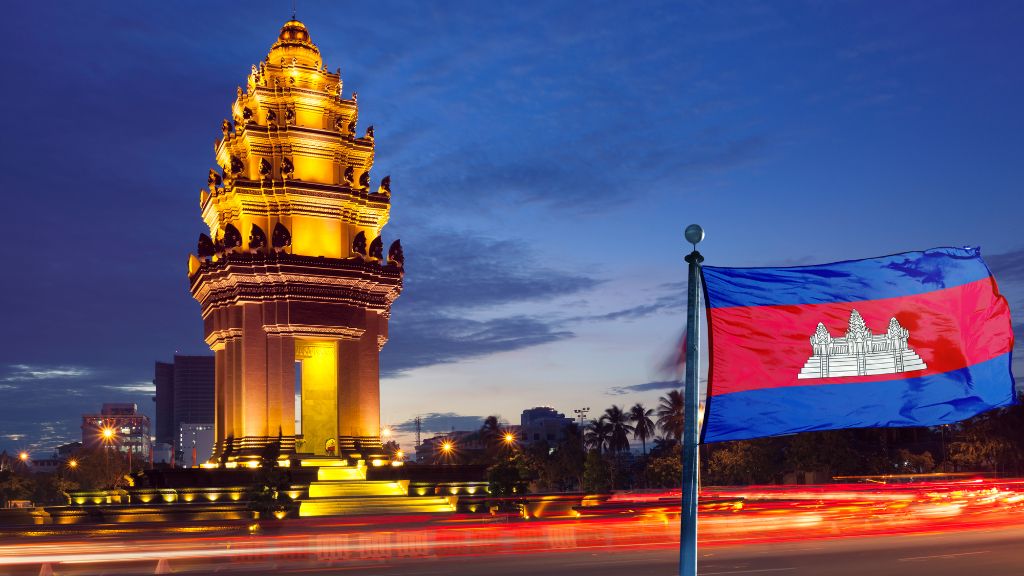
Casinos-turned-compounds in Cambodia
The Treasury also targeted “groups of scam centres in Cambodia. Many of these centres were built as casinos by Chinese criminal actors but became hubs for virtual currency investment scams when that activity proved to be more profitable.”
Among them is T C Capital Co. Ltd., which owns the Golden Sun Sky Casino and Hotel in Sihanoukville, “from which virtual currency scams and other illegal activities have been carried out, sometimes by victims of human trafficking.”
K B Hotel Co. Ltd. is also designated for operating a casino complex “where enslaved workers are forced to conduct virtual currency scams.”
Wider networks in Cambodia
The designations also cover Heng He Bavet Property Co. Ltd., linked to the Heng He Casino, and M D S Heng He Investment Co. Ltd., described as “the developer of a large virtual currency scam compound in Pursat Province in Cambodia.”
OFAC also included the Cambodian financial institution HH Bank, majority-owned by Chen Al Len and Su Liangsheng.
Treasury stated that these entities and individuals “materially assisted, sponsored, or provided financial, material, or technological support for, or goods or services to or in support of cyber-enabled activities.”
Sanctions implications
The sanctions mean that “all property and interests in property of the designated or blocked persons described above that are in the United States or in the possession or control of U.S. persons are blocked and must be reported to OFAC.”
The prohibitions also extend to transactions. “Unless authorised by a general or specific licence issued by OFAC, or exempt, OFAC’s regulations generally prohibit all transactions by U.S. persons or within (or transiting) the United States that involve any property or interests in property of blocked persons,” the Treasury said.
Treasury warned that “violations of U.S. sanctions may result in the imposition of civil or criminal penalties on U.S. and foreign persons.”


