


Inside Asia’s integrated resorts: Part two with Sudhir Kalé

With shifting regulations, political uncertainty, and changing market trends across Asia, casino operators are finding that keeping employees engaged and communicating clearly within their organisations is key to long-term success. Governments are reshaping the gambling landscape, from Sri Lanka’s launch of the Gambling Regulatory Authority, to India’s proposed Online Gaming Bill, to the uncertainty surrounding Thailand’s shelved casino bill. At the same time, the industry is seeing rapid developments in electronic gaming machines (EGMs) and large-scale integrated resort expansions, such as Marina Bay Sands in Singapore.
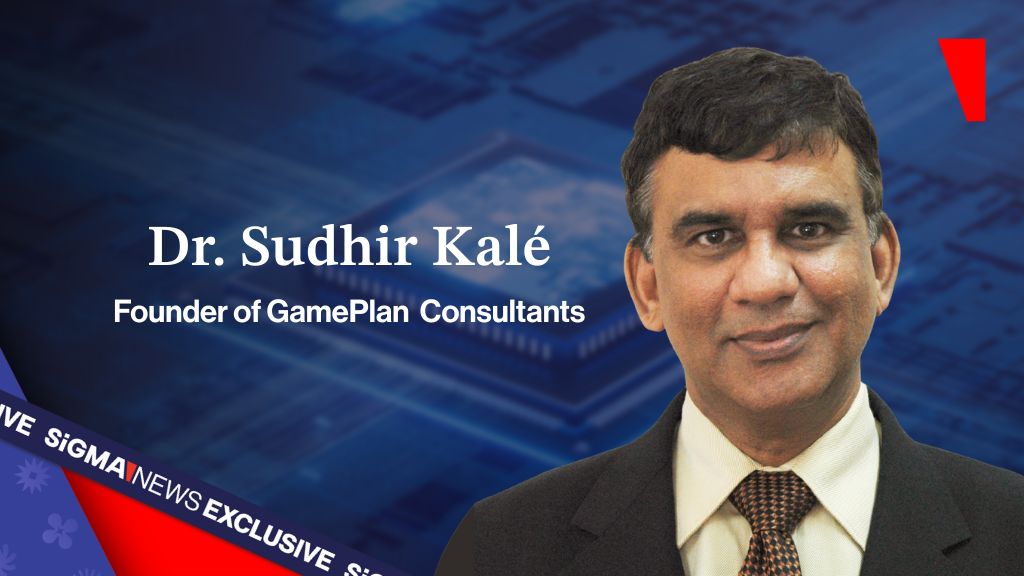
In Part One of this exclusive SiGMA News series, Dr Sudhir Kalé, Founder and Principal of GamePlan Consultants, explored the role of internal marketing, cultural alignment, and employee engagement in building resilient integrated resorts across Asia. He outlined how strong internal communication and leadership-driven engagement strategies can transform change from disruption into momentum.
In Part Two, Dr Kalé takes a closer look at how casino operators can adapt to new regulations, market ups and downs, and the growing challenges in Asia’s gaming sector. Drawing on decades of experience with top resorts worldwide, he offers practical advice on keeping employees motivated, well-trained, and aligned as the industry evolves.
SiGMA News: With Sri Lanka’s new Gambling Regulatory Authority aiming to standardise rules across land-based and online casinos, how should internal communications and employee training evolve to comply effectively?
Industry Expert Dr Sudhir Kalé: Sri Lanka is revamping its gambling laws, launching the Gambling Regulatory Authority (GRA) for unified oversight and to boost investor confidence. The new regime grants sweeping powers to the GRA to issue and revoke licences, increase taxes and fees, and demand strict compliance from operators. Online gambling remains unregulated for now, but foreign players are gearing up for market entry, fuelling global buzz.
One key component of the proposed regulations is doubling the entry fee for locals from $50 to $100. The increase is intended to boost government revenue and promote responsible gambling by discouraging casual or impulsive visits from local patrons. However, it is likely to have the opposite effect. Locals might enter the casino and stay longer to make the most of the entrance fee they have paid. In so doing, they will lose a lot more money than they would with the lower entry fee.
Around 60 per cent of players in Sri Lankan casinos are domestic patrons, with the remaining clientele comprising international visitors—primarily from India, China, and Russia. This pattern reflects the nation’s youthful demographic, strong local enthusiasm for gaming, and a steady rise in inbound tourism. According to a recent article in SiGMA World, Sri Lanka’s total revenues for 2020 were around $300 million. Clearly, the country has a long way to go before it catches up with casinos in surrounding countries such as Singapore, the Philippines, and even Nepal, though the figures are larger than the reported numbers for land-based casinos in India.
The key facet of internal marketing in light of the changing regulatory landscape is clear communication to the rank and file about what to expect in terms of the new regulations, and how to factor these regulations into designing revised standard operating procedures (SOPs). Self-paced learning using appropriate learning management systems (LMS) about the new policies and procedures should be made accessible to every employee. Tests to ensure that the learning has been internalised across the workforce should also be included at the end of each module. To make the learning interesting, gamification, animation, and AI can be used to good effect.
SiGMA News: With Thailand’s casino bill shelved and political uncertainty affecting investment, how can operators maintain employee engagement and service quality during such volatile periods?
Dr Kalé: There is not a whole lot to say about Thailand at this stage. The casino push in Thailand has come almost solely from the Shinawatra family. Thaksin Shinawatra tried to introduce casinos during his tenure as prime minister from 2001 to 2006. These efforts were unsuccessful. The casino initiative gathered momentum again when Thaksin’s daughter, Paetongtarn, became Thailand’s Prime Minister. Paetongtarn was suspended as prime minister in July and removed by the Constitutional Court in late August over a phone call with former Cambodian leader Hun Sen. The new prime minister, Anutin Charnvirakul, has declared his opposition to casinos.
Therefore, given the volatile climate in Thailand, most foreign companies previously interested in investing there have begun back-pedalling. It will be years, if ever, before the first legal casino sees the light of day in Thailand.
SiGMA News: India’s Online Gaming Bill 2025 may shift attention toward land-based operations. How should resorts adjust internal engagement, staffing, and internal marketing to respond to these changing market dynamics?
Dr Kalé: The Indian casino industry is notorious for its lack of transparency, and it is difficult to obtain reasonably accurate figures about the size of land-based operations. The 40% GST levied on patron buy-ins has further complicated matters. Anyone familiar with casino maths will tell you that such a high tax makes operations challenging. As a result, operators often struggle to resist the temptation to under-report or disguise the true amount of patron buy-ins.
Should there be a shift of patrons from online to land-based casinos in India, the land-based casinos will be the clear winners. They will gain more customers, which will translate into higher revenues. As casinos in Goa and Sikkim try to attract these new customers, customer service will become a powerful tool to engage and retain former online gamers. Training in customer service and redesigning customer-facing SOPs through techniques such as customer journey mapping and service blueprinting are two key recommendations that come to mind.
Nonetheless, the industry will continue to face reporting challenges both internally and externally. Customer interfacing staff will never know the effect of their efforts on the top line or bottom line. It is hard to remain motivated in your role when you are unable to assess the financial impact of your work.
SiGMA News: Rapid growth in the Asia-Pacific’s electronic gaming machine (EGM) segment is expected in the coming years. How should casinos prepare their workforce, in terms of skills and roles, to meet this expansion successfully?
Dr Kalé: Given the very low base from which slot machines started in Asian casinos, the percentage growth in revenues has been impressive, but the growth in sheer numbers is still modest. The ratio of slots (EGMs) to table games will always remain very low in Asia when compared with markets such as Australia and the United States. For example, Macau has around four to five times the gaming revenues of Las Vegas, yet Macau has only 12,000 EGMs, while Las Vegas has around 60,000 electronic gaming machines. The slots-to-tables ratio in Macau is 2:1, compared with around 27:1 in Las Vegas. Therefore, in the foreseeable future, it does not matter how much EGM revenues grow in Asian casinos; they will still constitute a tiny percentage of the revenues generated by gaming tables.
Regarding skills and roles, not much should change despite the growth in EGM revenues. Operating EGMs requires almost zero labour, so customer service for EGMs is not a significant issue, provided the gaming floor is clean and the EGMs meet player expectations in terms of variety and novelty. What will change is the competition among Asian casinos for EGM customers. EGM players will be loyal to those casinos that make them the right offer at the right time. Designing such customer-specific offers for EGM players will require a customer management system that deploys causal AI and advanced analytics. This has little to do with changes in workforce roles. EGMs will always be the poor cousin of table games in Asia.
SiGMA News: In large-scale expansions such as Marina Bay Sands in Singapore, what internal challenges arise when scaling service quality, and how can internal marketing and engagement initiatives help address them?
Dr Kalé: The larger a service establishment, the more challenging it becomes to offer standardised and consistently high-quality customer service. Customer service in integrated casino resorts involves significant emotional labour, and motivating frontline employees while keeping them engaged remains a major challenge.
At Galaxy Macau, anticipated challenges in maintaining service quality were addressed by first identifying the various segments the resort would serve. Relevant service blueprints were created with input from employees and executives responsible for each segment, and these blueprints were mapped to the standard operating procedures (SOPs) being developed. Employees were trained using both the SOPs and the service blueprints to ensure alignment and buy-in.
The key difference in achieving employee buy-in was the total involvement of the CEO and Vice Chairman in ensuring the highest level of customer service through participation in activities such as service blueprints and bringing them to life.
Marina Bay Sands has probably not yet fully harnessed the power of service blueprints in its customer service initiatives, although sophisticated software based on this concept is now available. This software integrates service quality with employee recruitment, appraisal, training, and rewards. MBS is somewhat insulated from competition, as it has only one main competitor. In locations such as the Philippines, employee engagement, employee experience, and internal marketing assume far greater significance.
As the casino industry in Asia faces regulatory changes, market fluctuations, and technological growth, maintaining employee engagement and clear internal communication is crucial. Dr Kalé emphasises that practical training, strong internal alignment, and ongoing support are essential for keeping staff motivated and delivering consistent, high-quality service.
Step inside the world’s biggest iGaming community. Join HERE for weekly updates from the world’s iGaming authority and unlock subscriber-only offers.


