


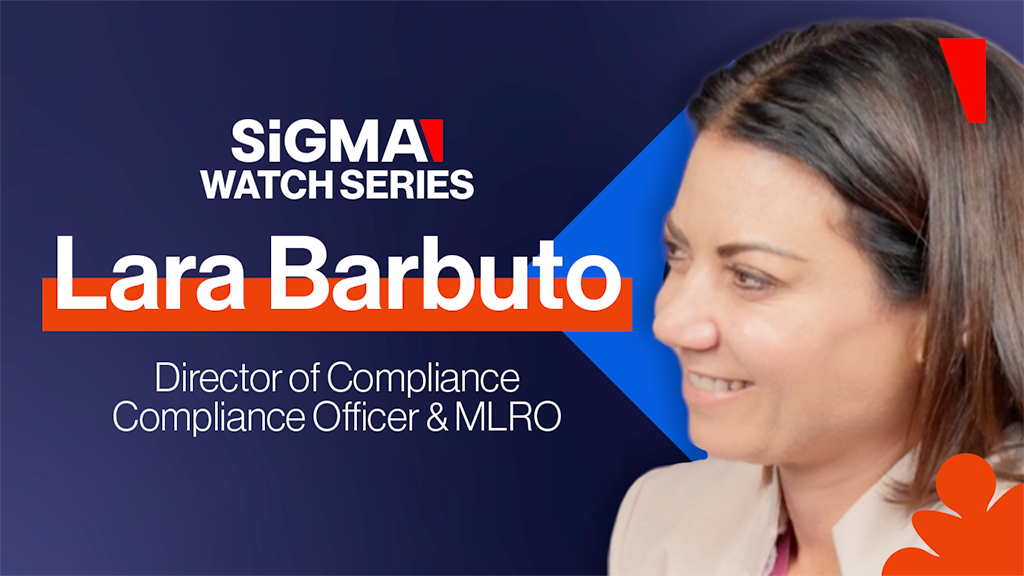
Compliance is no longer just a regulatory hurdle; it is reshaping fintech innovation, according to Lara Barbuto, Director of Compliance, Compliance Officer & MLRO (Malta) at OpenPayd. In an interview at the SiGMA Central Europe, Barbuto argued that dynamic compliance frameworks and regulatory engagement are driving fintech growth in Europe and beyond.
‘Build compliance the way you build product’
On how firms should approach compliance in a shifting regulatory landscape, especially as frameworks around digital currencies and stablecoins evolve across Europe, Barbuto said: “You need to think about compliance in the same way as you would think about product design. So you need to build it in early, and you need to make sure it’s flexible.”
She stressed that while rules change as frameworks evolve, core principles: protecting customers, safeguarding funds and knowing their origin, remain constant. “If you build your systems and policies around those core principles, it will be very easy to adapt when the regulations evolve. I think your compliance framework needs to be modular, you know, it can’t be static.”
This aligns with broader regulatory analysis on how fintechs must embed compliance during design phases. A recent study titled ‘The Role of Regulatory Sandboxes in FinTech Innovation,’ argues for the necessity of adaptive and collaborative governance models.
Industry surveys also show firms identifying regulatory clarity as a top challenge in complying with emerging frameworks like the European Union’s (EU) Markets in Crypto-Assets Regulation (MiCA), which took effect across the EU to harmonise digital asset rules.
Regulation can enable innovation
Barbuto believes well-designed regulation unleashes innovation rather than stifles it. “The regulators do not expect perfection. They expect to see progress, and they expect to see clear thinking.” She added, “So you need to be able to explain the decision that you’re taking and you need to explain that you show that you are actually improving as you move forward.”
Recent fintech industry reports predict that compliance and regulatory engagement will be central to fintech strategies in 2026, including navigating new digital payment infrastructures, anti-money laundering (AML) requirements and crypto-asset frameworks.
On the other side of the spectrum, analysis of MiCA’s early implementation highlights that high compliance costs and licensing complexity under MiCA have forced some startups to exit or relocate, according to AInvest. This has raised concerns that stringent regulation might hamper smaller innovators. The report also noted that the EU’s blockchain job market has contracted from 100,000 in 2022 to 10,000 in 2025.
Embedded finance and API-driven risk
Barbuto praised Malta’s regulatory direction while calling for faster guidance and coordination. She said, “Malta has really been able to reach that balance. We have definitely seen clear expectations from the regulator, more open dialogue with the industry.”
She underlined the importance of data visibility and minimisation and adapting monitoring systems to real-time transactions, “Traditional static rules, they don’t longer apply at all. So you need to monitor transaction behaviours and patterns and velocity, not just like thresholds.”
Integration of APIs and embedded finance is also reflected in market data. According to Research and Markets, the European embedded finance market is projected to grow by 11.1 percent on an annual basis to hit $143.2 million by 2025, driven by cross-sectoral partnerships that depend heavily on robust compliance and risk management frameworks.
Malta’s position as a compliance-friendly hub
Barbuto praised Malta’s regulatory direction while calling for faster guidance and coordination. Barbuto said Malta as a jurisdiction has struck “that balance” between innovation and regulatory robustness. Barbuto noted, adding that “a real effort to align with European frameworks, let’s take MiCA, for example, has really grown confidence in Malta as a jurisdiction and built the trust needed for innovation to happen safely, in a predictable environment.”
She said further improvements could accelerate fintech scale-up without lowering standards. “I would say a little bit more speed, maybe, and coordination,” Barbuto said, pointing to “faster review timelines” and “clearer guidance,” especially around stablecoins or custody requirements.
Barbuto also called for “coordination between the regulators so that firms don’t have to duplicate their efforts or get mixed signals.” The direction of travel remains positive, she stressed: “It’s not about slowing things down or reducing that standard. It’s just about a little bit more clarity, maybe, and efficiency.”
Recent developments show Europe’s MiCA Level 2 standards are being refined, including specific authorisation applications and FAQs, which can help firms operationalise compliance. Meanwhile, the UK is pursuing its own regulatory frameworks, with authorities planning new crypto regulation that balances consumer protection with innovation incentives, aiming for implementation by 2027, according to Reuters.
Meanwhile, in a previous discussion at SiGMA Euro-Med 2025, the AIBC stage hosted an impactful panel discussion on the evolution of digital banking and fintech. The panel also explained that fintechs must simplify complex concepts used in the space and clearly communicate the benefits to users.
Malta has long been at the forefront of FinTech and virtual asset regulation, balancing innovation with robust oversight. Another discussion focused on how Malta is shaping the future of digital finance and creating a supportive environment for emerging technologies.
Compliance as a strategic growth enabler
Barbuto also shared her view that compliance is now a key business accelerator, not a drag on growth, “Compliance has definitely evolved over the last couple of years, definitely.” She added that, “I would say that good compliance is actually a growth enabler, when you have good compliance in your business.”
She explained that strong compliance frameworks can help firms shorten due diligence timelines with banks and partners. “This leads to actually faster due diligence timelines with banking partners, for example, or other providers. It’s the backbone of credibility.”
Subscribe HERE to SiGMA’s Top 10 News countdown and SiGMA’s weekly newsletter to stay up to date with all the latest iGaming News from the biggest iGaming community in the world and benefit from subscriber-only offers.


