


From dial-up to AI: iGaming evolution with Moshe Adir

The iGaming industry has undergone one of the most dramatic digital evolutions in modern entertainment, from the era of clunky dial-up connections and mailed compact disc read-only memory (CD-ROM) to today’s AI-personalised, mobile-first ecosystems. What began as a niche experiment in the mid-1990s has transformed into a multi-billion-dollar sector driven by seamless technology, data intelligence, and shifting consumer behaviours. Each technological leap—from desktop to mobile, and now to artificial intelligence—has redefined how people play, engage, and connect with gaming brands.
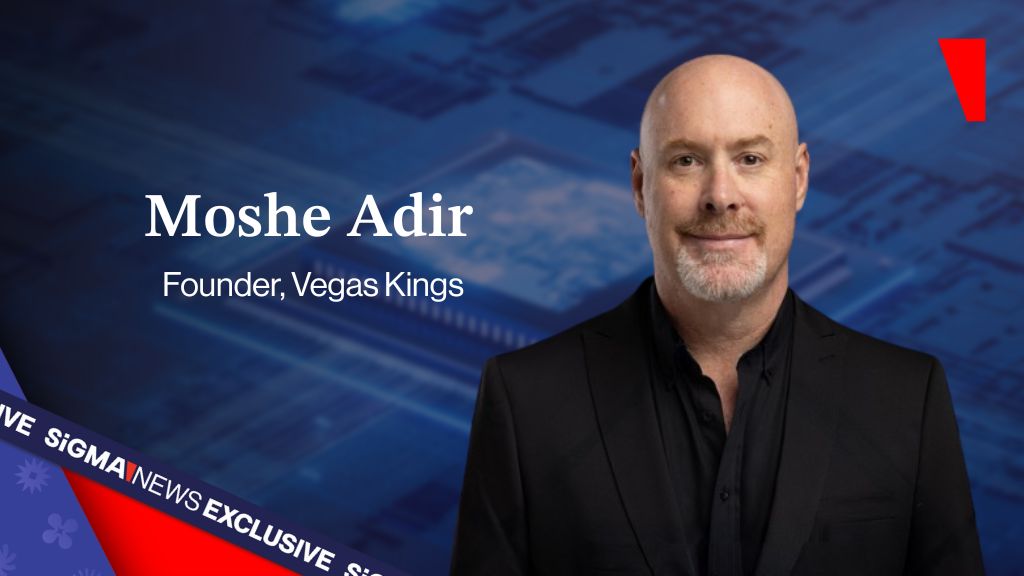
Speaking exclusively with SiGMA News, Moshe Adir, Founder of Vegas Kings, looks back on 30 years of digital transformation, discussing the pivotal moments that shaped online gaming, how mobile revolutionised player behaviour, and why AI may soon force the industry to rethink responsible gambling altogether.
SiGMA News: You’ve seen iGaming evolve from dial-up to AI—what would you say were the three most significant turning points in its digital journey?
Moshe Adir, Founder of Vegas Kings: Looking back over these 30 years, three moments stand out as absolute game-changers:
First was 1994-1996, when we realised the CD-ROM model was actually working. I remember watching Microgaming mail those shiny discs to players’ homes because dial-up couldn’t handle the downloads. It sounds ridiculous now, but it proved that people wanted to gamble online. That was the moment – this wasn’t just a tech experiment anymore.
The second was the 2006 Unlawful Internet Gambling Enforcement Act (UIGEA) crash. I watched clients disappear overnight when the US market slammed shut. But here’s what people miss: it forced the industry to grow up. We stopped being cowboys and became professionals. Regulation wasn’t our enemy; it was our salvation. The operators who survived that period built the foundations for everything we have today.
Third was mobile taking over around 2010-2012. Not just because everyone got smartphones, but because it changed how people gamble. Desktop was an event. You’d sit down, log in, and play for hours. Mobile made it ambient. A few spins while waiting for coffee, a quick bet during lunch. It transformed gambling from an activity to an atmosphere.
SiGMA News: How did the transition from desktop to mobile redefine user engagement and retention strategies?
Adir: Mobile didn’t just shrink our designs, it completely rewired player psychology. On desktop, we optimised for sessions. On mobile, we optimise for moments.
voI remember redesigning a major casino site in 2012, and our client kept asking, “Where’s the lobby?” But mobile players don’t browse lobbies like they’re in Caesar’s Palace. They want their favourite slot game accessible in two taps, period.
The retention game changed completely. Desktop players were loyal to casinos. Mobile players are loyal to experiences. If your app takes more than three seconds to load or requires five taps to place a bet, they’re gone. We learned to design for attention spans measured in heartbeats, not minutes.
Push notifications became our secret weapon, but only when used sparingly. The operators who sent daily spam lost players. The ones who sent smart, contextual nudges like ‘Your favourite table is hot!’ built engagement.
SiGMA News: Where do you see AI and machine learning having the greatest impact on player behaviour and platform design?
Adir: Honestly, AI is already here. Most operators just don’t realise how deeply it’s embedded. The personalisation engines deciding which games to show, the risk management systems flagging unusual betting patterns, the customer service bots handling 70 percent of support tickets, that’s all AI.
But where it gets really interesting is behavioural prediction. We’re moving from “this player likes slots” to “this player is likely to deposit €50 on Thursday evening if we show them a 20 percent bonus with their morning coffee push notification.”
The design implication is huge. Instead of building one experience for all players, we’re building frameworks that adapt in real-time. Colours that change based on win/loss streaks, game suggestions that evolve with mood, and even user interface (UI) elements that appear or disappear based on player stress indicators.
The scary part? AI is getting so good at predicting player behaviour that we might need new responsible gambling tools. When the machine knows you’re going to chase losses before you do, what’s our ethical obligation?
The future of iGaming
SiGMA News: What excites you most about the next five years in iGaming?
Adir: AI personalisation is reaching the point where every player gets a genuinely unique experience. Not just “players like you also played these games,” but platforms that adapt their entire interface, game selection, bonus structures, and communication style based on individual psychology.
I’m also excited about the blurring lines between gaming and gambling. We’re seeing casino mechanics in video games and video game mechanics in casinos. The next generation of players won’t see much difference between earning rare skins in Counter-Strike: Global Offensive (CS: GO) and earning bonus spins in slots.
But what really gets me fired up is emerging markets like Latin America, Africa, and Asia. These regions are leapfrogging straight to mobile-first, crypto-enabled gambling experiences that would have been science fiction when I started.
SiGMA News: If you were launching Vegas Kings today, what would you approach differently?
Adir: I might just become an operator from day one and call my casino Vegas Kings! That’s a half-truth, though. I love the journey I have been on by creating an impressive agency, bringing brands to life.
One step I would have made is to add additional services such as customer relationship management (CRM), gamification, media buying, etc. These are essential to our clients’ growth, and we do touch on those services, but we have not officially built business divisions around them to really service them at scale.
The core principle would remain the same: specialise deeply in one industry instead of trying to serve everyone. That decision to sell Stonewall Productions and focus purely on gaming was the smartest move I ever made.
Shifts ahead
SiGMA News: Having witnessed the transition from land-based dominance to digital leadership, what do you believe is the next major paradigm shift on the horizon?
Adir: We’re heading toward ambient gambling. Not dedicated gambling sessions, but gambling integrated into daily digital life. Imagine betting on sports scores while watching Netflix, playing slot mini-games during Uber rides, or earning casino chips through shopping apps. The distinction between “gambling platforms” and “platforms with gambling features” will disappear.
Blockchain and crypto are enabling this by making micro-transactions frictionless. Why wouldn’t a food delivery app let you bet on your delivery time while you wait?
However, the regulatory implications are massive. How do you age-verify someone placing a €0.50 bet through a social media app? How do you apply responsible gambling tools across interconnected platforms? The companies that figure this out first—not just technically, but regulatorily and ethically—will dominate the next decade.
Global & regulatory trends
SiGMA News: From your perspective, what are the most impactful regulatory developments currently shaping the iGaming landscape? For instance, India’s recent move to ban real-money gaming while promoting esports has made headlines globally.
Adir: India’s move to ban real-money games is fascinating because it shows how regulators are starting to make sophisticated distinctions between different types of digital entertainment. They’re not banning all gaming. They’re creating a framework where skill-based games (esports) are encouraged while pure chance games are restricted. This is the future of regulation: nuanced rather than binary. Instead of “gambling bad, gaming good,” we’re seeing “this type of gambling under these conditions with these protections.”
What excites me is proactive regulation—places like Ontario and several US states that studied other markets’ mistakes before launching. They’re creating frameworks that protect consumers without strangling innovation.
Rome wasn’t built in a day, but your next deal could be. SiGMA Central Europe lands in Italy, 03–06 Nov 2025. With 30,000 delegates, 1,000+ exhibitors, and 550+ expert speakers, history is calling at the mother of all conferences. Be there.


